

If you are applying to university today, you are facing a fundamentally different landscape from previous generations. With the advancement of artificial intelligence, entire industries are being reshaped at a pace that is constantly redefining what “job security” means. As a result, you may be asking yourself an increasingly common question: what are the best degrees for the future?
While your university course should still be centred around a subject you are genuinely passionate about, it is also worth considering how different disciplines may be affected by technological change. As AI takes on a growing number of tasks across industries, choosing a degree that develops valuable and adaptable skills could help you navigate a rapidly changing job market.
In this guide, we explore some of the most AI-proof degrees – or, more accurately, the most AI-resistant degrees – highlighting 10 subjects that are likely to remain valuable in an increasingly AI-driven economy. Drawing on labour market forecasts, employer insights, and industry research, we also examine the skills and career paths expected to offer the strongest prospects in the future. For further reading, you may also find our guide on the five degrees with the best job prospects in the UK useful.
Although no one can predict with complete certainty how artificial intelligence will transform every industry, current evidence suggests that degrees which develop certain skills and competencies are likely to be more resilient than others. By understanding which subjects are best positioned to adapt to technological change, you can make more informed decisions about your academic and professional future.

Artificial Intelligence and Higher Education
AI is becoming increasingly integrated into both education and the workplace and universities, students, and employers alike are paying closer attention to how these developments may influence the value of different degrees over time.
However, AI is unlikely to make entire disciplines obsolete overnight. Instead, its impact is expected to vary significantly between industries and professions. While some roles may become increasingly automated, others are likely to evolve alongside AI, placing greater emphasis on uniquely human skills and higher-level decision-making.
AI-Proof Degrees: What Makes a Degree Future-Proof?
Despite the popularity of the term, there is no such thing as a truly “AI-proof” degree. Technological change has always transformed the labour market, and artificial intelligence is no exception. Rather than looking for degrees that are completely immune to disruption, it is more useful to consider which subjects are most likely to remain relevant and adaptable as technology continues to advance.
Generally speaking, future-proof degrees tend to develop skills that are difficult to automate, such as complex problem-solving, critical thinking, ethical judgement, creativity, leadership, and interpersonal communication. They also often lead to careers that require human responsibility, contextual decision-making, or physical interaction with people and the world around us.
This does not mean that technical subjects are automatically safer than non-technical ones, or vice versa. Some of the most resilient degrees combine specialist knowledge with transferable skills that can be applied across multiple industries. Likewise, interdisciplinary degrees such as Philosophy, Politics and Economics (PPE), Human, Social and Political Sciences (HSPS), or Economics and Management can equip you with a broader range of analytical and professional skills, helping you remain adaptable as industries evolve. In some cases, integrated master’s programmes can also strengthen this further by allowing for deeper, more sustained engagement with advanced technical or analytical study, which can be particularly valuable in fast-changing fields.
Ultimately, the degrees most likely to thrive in an AI-driven economy are those that help you adapt, continue learning, and create value in ways that technology alone cannot easily replicate.
Develop the Skills That AI Cannot Easily Replace
The advantage of Oxbridge and G5 universities is not simply their reputation, but their ability to develop independent thinking, intellectual rigour, and advanced problem-solving skills through challenging academic environments.
UniAdmissions’ Oxbridge Preparation Programmes are designed to help you secure a place at the universities that are best known for cultivating these future-focused capabilities. Our students achieve a 67% Oxbridge success rate – over x4 times the national average.
How We Identified the Best Degrees For The Future
To identify the best degrees for the future, we analysed a combination of labour market forecasts, employer surveys, industry reports, and academic research to determine which subjects are most likely to remain relevant.
Rather than ranking degrees based on graduate salaries, university prestige, or current popularity, we focused on long-term resilience. Specifically, we examined the industries, occupations, and skills expected to experience sustained demand over the coming decade, before mapping these findings back to the university degrees most closely associated with those career paths. For a complementary perspective, you can also explore our guide on the highest-paying degrees in the UK.
A particularly influential secondary source was the World Economic Forum’s Future of Jobs Report 2025, one of the largest global studies of workforce trends. The report surveyed more than 1,000 employers across 55 economies, representing over 14 million workers worldwide, and identifies the occupations, industries, and skills expected to grow or decline by 2030.
According to the report, artificial intelligence, automation, demographic shifts, and the global energy transition will significantly reshape the labour market over the coming years. While 92 million jobs are projected to be displaced by 2030, the WEF forecasts that 170 million new roles will be created, resulting in a net increase of 78 million jobs globally.
Key Workforce Projections (2026 – 2030)
- 92 million jobs displaced
- 170 million new jobs created
- Net increase of 78 million jobs
- Equivalent to 7% of current global employment
Timeline chart showing global job displacement and creation from 2026 to 2030, based on the World Economic Forum Future of Jobs Report 2025.
Crucially, the report suggests that the careers most resilient to automation are not necessarily those least affected by technology. Instead, they tend to fall into three broad categories: professions requiring advanced human judgement and decision-making, roles centred on interpersonal interaction and care, and occupations involving complex physical or technical tasks that remain difficult to automate.
These findings helped shape our rankings. Degrees linked to healthcare, engineering, education, law, agriculture, environmental sustainability, management, and other high-growth sectors scored particularly well, especially when they developed the skills employers increasingly value. These include analytical thinking, systems thinking, leadership, adaptability, teaching and mentoring, technological literacy, and complex problem-solving. We’ll discuss skills in more detail later on.
The 10 Best Degrees for the Future: The Most AI-Proof Degrees Ranked
10. Agriculture
Agriculture sits at the intersection of food security, climate adaptation, and resource management. While parts of the sector are becoming more automated (particularly through precision agriculture and robotics), workforce projections still point to continued demand for farm management, agronomic decision-making, and food system expertise. The key resilience factor is variability: weather patterns, soil conditions, and ecological systems remain difficult to fully automate or predict, meaning human judgement still plays a central role.
9. Environmental Science
Environmental Science is strongly tied to one of the most consistent growth drivers in workforce forecasts: the green transition. Roles linked to environmental protection, sustainability, and renewable energy development are projected to expand, particularly in response to regulatory change and climate risk. What makes this field resilient is that it sits between data science and policy implementation, requiring interpretation of complex environmental systems alongside real-world constraints in infrastructure, regulation, and public decision-making.
8. Social Sciences (Politics / Sociology / Social Policy)
Social sciences are less exposed to automation because they deal directly with how institutions, populations, and behaviours interact under changing economic and political conditions. While AI can process large-scale social data, it cannot easily replace the interpretative layer required in policy design or political analysis. Workforce research consistently highlights growth in governance, public policy, and societal resilience roles, all of which depend on contextual reasoning rather than fixed rules.
7. Psychology
Psychology remains one of the more resilient applied sciences because it combines empirical research with human interpretation. While AI is increasingly used in screening tools, data analysis, and early-stage diagnostics, the interpretation of behaviour, clinical judgement, and therapeutic work still relies heavily on human interaction. In workforce terms, this aligns closely with the sustained growth in care-related and mental health professions, which are repeatedly identified as areas of net job expansion. If you are considering this route at top universities, you can also explore our guides on the Oxford Psychology entry requirements and Cambridge Psychology entry requirements to understand the academic expectations in more detail.
6. Computer Science
Computer Science is often misunderstood in AI discussions. While it is true that routine coding is becoming increasingly automated, demand is shifting rather than disappearing. The most resilient areas are those closest to systems design, infrastructure, cybersecurity, and AI development itself. In other words, the field is moving up the value chain: away from task execution and towards architecture, oversight, and problem definition. This is why it remains a growth discipline, even as parts of it are disrupted.
5. Economics and Management
Economics and Management sit at the core of decision-making in complex organisations. Workforce projections consistently highlight growth in roles linked to business strategy, operations, and organisational leadership. What makes this field resilient is not data analysis itself (much of that is now AI-assisted) but the interpretation of incomplete or conflicting information. Strategic decision-making still depends on human judgement, especially in environments where outcomes are uncertain and trade-offs are political as much as analytical.
Access "The Big Book Of Oxbridge Applications" For FREE
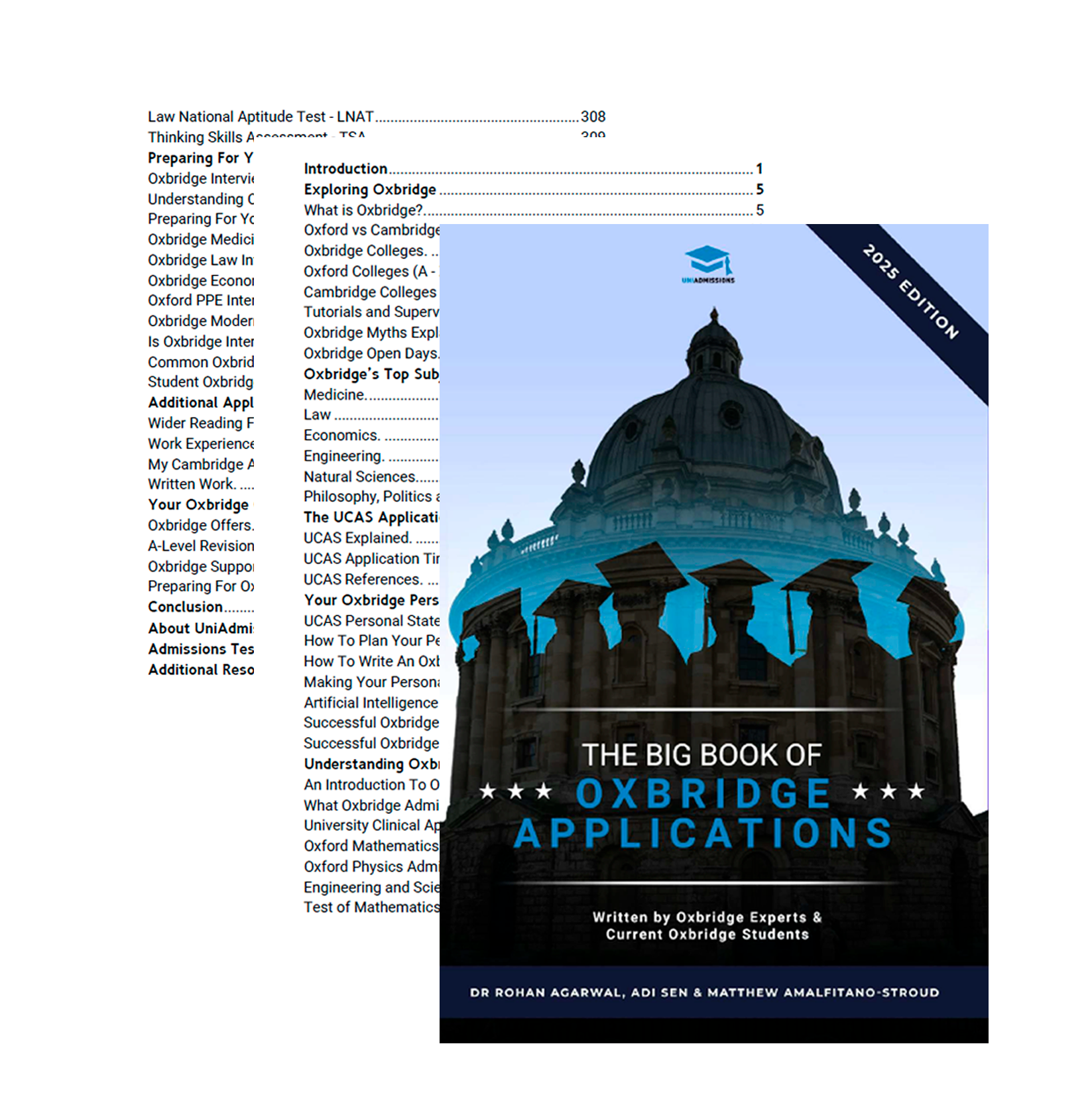
- Over 40 admissions test practice questions
- 28 example Oxbridge Personal Statements
- Interviews with Oxbridge students and graduates
- Additional downloadable resources
4. Education
Education is one of the largest projected areas of workforce expansion globally, driven by demographic growth and increased participation in secondary and higher education. While AI will support areas such as marking, planning, and content delivery, the core of teaching remains relational: adapting explanations in real time, managing classroom dynamics, and responding to individual learner needs. These are precisely the kinds of contextual, human-facing skills that remain difficult to replicate at scale.
3. Law
Law remains highly resistant to automation due to its dependence on interpretation, precedent, and adversarial reasoning. While AI can already support document review and legal research, it struggles with the core of legal practice: constructing arguments under ambiguity and applying abstract principles to unique cases. Importantly, legal systems also require accountability, meaning final decision-making must remain human even where AI is used as a support tool.
2. Engineering (Civil / Mechanical / Electrical)
Engineering consistently ranks as a resilient field because it combines theoretical knowledge with real-world constraints. Workforce forecasts highlight strong demand across infrastructure, energy systems, and advanced manufacturing, particularly linked to electrification and climate adaptation. While AI is increasingly embedded in design and simulation, engineers still operate in environments where safety, regulation, and physical unpredictability require final human oversight.
1. Medicine
Medicine remains one of the most consistently resilient fields due to its combination of clinical complexity, ethical responsibility, and direct human care. Although AI is already highly effective in areas such as imaging analysis and diagnostic support, healthcare delivery still depends on human accountability, patient interaction, and contextual judgement. Workforce projections also show sustained expansion in healthcare roles driven by ageing populations and rising demand for care services globally, reinforcing its long-term stability relative to other sectors.
Many of the same factors apply to Dentistry and Veterinary Medicine. Both professions require advanced scientific knowledge, practical clinical skills, and direct responsibility for patient outcomes, making them among the most resilient career paths in an increasingly AI-driven economy.
Are Oxbridge and G5 Degrees More Future-Proof?
Oxbridge and G5 universities are often perceived as offering a stronger degree of “future-proofing” due to their academic selectivity, research intensity, and strong employer reputation. These institutions offer courses that are more closely aligned with high-skill, analytical, and research-driven fields that remain less exposed to automation.
In practice, this resilience is more about both what is taught and how it is taught. Subjects such as Medicine, Law, Engineering, Economics, Mathematics, and Natural Sciences require high levels of abstract thinking, problem-solving, and human judgement – skills that are significantly harder to replicate with technology. As a result, applicants studying these disciplines at Oxbridge or G5 institutions are often entering academic environments that are inherently structured around developing advanced cognitive capability and intellectual independence.
At Oxford and Cambridge in particular, the tutorial and supervision system plays a major role. Instead of large lecture-only teaching, you regularly sit down with an expert in your subject and talk through your ideas in detail. You are expected to defend your thinking, respond to challenges, and apply what you know to unfamiliar problems. Over time, this builds confidence in structured thinking and the ability to work through uncertainty.
At Imperial, LSE, and UCL, teaching is often more lecture-based but still highly rigorous, with a strong focus on problem sets, data analysis, essays, and case-based work. The emphasis is on applying knowledge properly, not just memorising it, and on handling material that doesn’t always have a clear or fixed answer.
These approaches tend to develop the kind of thinking that matters most in a changing job market: the ability to reason clearly, think independently, and adapt what you know to new situations. That is where Oxbridge and G5 degrees can offer an advantage. Not because they are immune to change, but because they consistently train the kinds of skills that are hardest to automate.
Secure Your Place on a Future-Proof Degree
Choosing the right degree is only part of the equation. Gaining admission to a world-leading university can help you develop the analytical, problem-solving, and critical thinking skills that employers increasingly value in an AI-driven world.
UniAdmissions’ Oxbridge Preparation Programmes have been designed to maximise your chances of receiving an offer from Oxford or Cambridge. With a success rate of 67% — more than four times the national average — we help ambitious students prepare for every stage of the admissions process.
Key Skills That Protect Against AI Displacement
Our research suggests that the most resilient careers are built on skills that rely on judgement, interpretation, and adaptability rather than routine or repeatable tasks. Degrees that consistently develop these capabilities are therefore more likely to remain relevant in an AI-driven economy.
Resilience, Flexibility & Intellectual Agility
As technology evolves quickly, the ability to adapt matters as much as subject knowledge. Employers increasingly value individuals who can adjust their thinking, learn new systems, and respond effectively to unfamiliar problems. In academic contexts, this reflects intellectual agility – the ability to move between ideas, methods, and perspectives when required.
Programming & Technological Literacy
Technological literacy is becoming increasingly important across disciplines, not only in computing but also in economics, science, and the social sciences. This includes understanding how data is structured, how digital systems operate, and how AI tools can be applied critically rather than passively.
Applied Precision & Technical Judgement
Some of the most resilient roles involve high-stakes, real-world application where accuracy and judgement are critical. This is particularly evident in medicine, engineering, and laboratory-based sciences, where decisions must be made in complex, often unpredictable environments that cannot be fully standardised or automated.
Analytical Reasoning & Critical Thinking
At the core of many strong degrees is the ability to construct arguments, evaluate evidence, and solve complex problems. This includes mathematical reasoning, scientific analysis, and essay-based critical thinking. In more traditional academic settings, these skills are often developed through sustained engagement with challenging material and regular intellectual defence of ideas.
Teaching, Mentoring & Communication
Education and training rely on the ability to explain complex ideas clearly and respond to individual needs. These roles depend on communication, empathy, and the ability to adapt explanations in real time.
Leadership, Judgement & Social Influence
Organisations continue to depend on individuals who can make decisions under uncertainty, lead teams, and communicate direction effectively. This combines strategic thinking with human judgement, particularly in situations where outcomes are not fixed and trade-offs must be carefully balanced.
AI-Proof Careers In A Changing Job Market
Workforce research increasingly points to clusters of roles that are more resilient to automation because they rely on skills discussed above rather than repeatable outputs.
The most AI-resilient careers are not defined by being “tech-free”, but by how they integrate technology with human judgement. The strongest long-term opportunities are likely to sit in roles where AI acts as a tool rather than a replacement, supporting professionals who can interpret, decide, and take responsibility in complex real-world situations.
Healthcare and Care Professions
One of the most stable groups of careers is found in healthcare and care professions. Roles such as doctors, nurses, therapists, and social workers continue to grow due to demographic pressure, rising healthcare demand, and the complexity of patient care. While AI can support diagnostics and administrative tasks, it cannot replace the responsibility, ethical judgement, or interpersonal trust required in clinical and care-based decision-making.
Education and Human Development Roles
A second resilient category is education and human development roles. Teachers, lecturers, and training professionals are increasingly supported by digital tools, but the core of the profession remains adaptive communication. That means responding to individuals, managing group dynamics, and explaining complex ideas in different ways depending on context.
Engineering, Infrastructure, and Technical Problem-Solving Roles
A third cluster includes engineering, infrastructure, and technical problem-solving roles, particularly in civil, mechanical, and electrical disciplines. These careers combine theoretical knowledge with physical-world constraints, where safety, regulation, and on-site decision-making remain central. Even as AI becomes more embedded in design and modelling, final responsibility for systems that affect public safety still rests with human engineers.
Law, Economics, Public Policy, and Management Roles
Alongside these, law, economics, public policy, and management roles remain relatively resilient because they operate in environments defined by uncertainty, competing priorities, and interpretation rather than fixed rules. AI may increasingly assist with analysis, but strategic decision-making, negotiation, and accountability continue to depend on human judgement.
Roles Related to Sustainability, Environmental Systems, and the Green Economy
Finally, emerging roles in sustainability, environmental systems, and the green economy are expected to expand significantly. Driven by climate transition and regulatory change, these careers combine technical expertise with policy implementation and on-the-ground problem-solving, reinforcing the importance of adaptable, interdisciplinary thinking.
Ready to Apply for a Future-Proof Degree?
The most resilient careers of the future are likely to belong to those who combine specialist knowledge with strong analytical, communication, and problem-solving skills. For many students, studying subjects such as Medicine, Law, Engineering, Economics, or Psychology at Oxford, Cambridge, or another leading university is one of the most effective ways to develop those capabilities.
If you’re aiming for Oxbridge, UniAdmissions can help. Our expert tutors, and subject specialists have helped over 1,210 students secure offers from Oxford and Cambridge, achieving a success rate of 67% —more than four times the national average.
Frequently Asked Questions
Choosing a degree should start with a balance between genuine academic interest and long-term skill development. You should think about what subjects you enjoy studying in depth, but also how those subjects develop skills such as critical thinking, communication, problem-solving, and adaptability. It is also worth considering how closely a degree aligns with a range of careers rather than a single fixed job path, especially as AI continues to change the labour market.
Subjects such as Medicine, Engineering, Law, Economics, and other disciplines that combine specialist knowledge with real-world decision-making. The key factor is not the subject name itself, but the extent to which it builds transferable skills that remain valuable across different careers and industries.
No career is completely “safe” from AI, but some are significantly more resistant to automation. These tend to be roles that require direct human interaction, ethical judgement, and decision-making in complex or unpredictable environments.
Healthcare, education, social care, law, engineering, and leadership roles are all examples where AI is more likely to act as a support tool rather than a replacement. The common factor across these careers is that they involve responsibility for real-world outcomes that cannot be fully delegated to machines.
Jobs most exposed to AI tend to involve repetitive, rules-based, or highly standardised tasks. This includes certain administrative roles, basic data processing, routine content production, and some entry-level analytical tasks that follow predictable patterns. As AI systems become more advanced, many of these tasks are increasingly automated or integrated into software tools. However, in most cases, it is not entire jobs that disappear, but specific parts of roles that are gradually automated, with remaining responsibilities shifting towards higher-level judgement and oversight.

