

5 things to know
Key Takeaways
- Each module gets its own score. Every ESAT module is scored from 1.0 to 9.0, and there’s no overall total. Most candidates take three modules, and universities see each score separately.
- There are no grade boundaries or pass mark. Scores are calculated with a model that adjusts for how hard your questions were, so no raw-mark conversion table exists. Your score is judged against other applicants’ scores.
- Most candidates score around 4.0 to 4.5. UAT-UK designs the test so typical candidates score around 4.5. In 2025/26, the median was 4.0 or 4.5 in every module.
- Aim for 6.0 or more, and 7.0 or more to stand out. In 2025/26, about 17–23% of candidates scored 6.0 or more in each module, and about 8–13% scored 7.0 or more. Cambridge offer holders averaged between 5.6 and 6.2 per module, against about 4.7 to 4.8 for all applicants.
- Oxford and Cambridge applicants must sit in October. The next sitting runs from 12 to 16 October 2026, and Oxford says results are due on 16 November 2026. You can only sit the ESAT once per application cycle.
If you’re applying to study at the universities of Oxford and Cambridge or Imperial College London, you may need to sit the Engineering and Science Admissions Test (ESAT) during the process. The ESAT is designed to test applicants on their scientific knowledge, so getting a good score is an important part of impressing the admissions tutors at the university/college.
But how is the test scored, and what’s considered a good score? In this guide, we’ll explore these questions and look at results from previous years to understand what score you should be aiming for when sitting the ESAT.
ESAT Results 2026
Results for the October 2025 and January 2026 sittings are out. The next ESAT sitting runs from 12 to 16 October 2026, and Oxford says those results are due on 16 November 2026. The final sitting for 2027 entry runs from 4 to 8 January 2027.
How Is The ESAT Scored?
The ESAT has five modules: Mathematics 1, Mathematics 2, Physics, Chemistry and Biology. Everyone takes Mathematics 1, and most candidates take two more, so three modules in total. Some courses tell you which modules to take. We cover the format in more detail in our ESAT Basics Guide.
Each module has 27 multiple-choice questions and lasts 40 minutes, so most candidates sit for 120 minutes. There’s no negative marking, so it’s always worth answering every question. You can’t use a calculator.
Your answers aren’t simply counted up. UAT-UK, which runs the test, analyses responses using a statistical model (the Rasch model) that accounts for how difficult each question was. Each module is then put on a scale from 1.0 (low) to 9.0 (high), to one decimal place. Very low scores are capped at 1.0 and very high scores at 9.0, so those two scores cover a range of performances.
You get a separate score for each module, not an overall total. UAT-UK designs the scale so that typical candidates score around 4.5, and about 10% score above 7.0. January scores are put on the same scale as October, so the two sittings can be compared.
Which Courses Require The ESAT?
For 2027 entry (applying in autumn 2026), these courses require the ESAT:
Oxford and Cambridge applicants must sit the ESAT in October. Imperial applicants can sit in October or January, but only once per cycle, and Imperial only considers your first score.
We know what a good ESAT score is and how to get you one
At UniAdmissions, we have spent over 10 years preparing students for many different admissions tests, as well as the other aspects of their application. Our comprehensive curriculum is the secret to finding success in any area of the application process, including the ESAT.
Discover our ESAT Support below and find out how you can enrol and triple your chances of success.
ESAT Grade Boundaries
There are no ESAT grade boundaries, and there’s no pass mark. UAT-UK says so directly, and Imperial and Cambridge both repeat it.
That’s because of how the test is marked. Each candidate’s score comes from a statistical model that takes account of how hard their particular questions were, and the questions differ between candidates and sittings. So there’s no fixed table that turns, say, 18 correct answers into a set score, and none is published.
What you can do is compare yourself with everyone else. The results tables below show what percentage of candidates got each score in every module, and the percentile tables show roughly where a score puts you. Cambridge’s own figures, further down, show the average scores of its offer holders.
The NSAA and ENGAA, which the ESAT replaced at Cambridge, did publish raw-mark conversion tables. We’ve kept the last one in the historical section at the end of this page, but it doesn’t apply to the ESAT.
Which Courses Require The ESAT?
For 2027 entry (applying in autumn 2026), the ESAT is used by three universities: Cambridge, Oxford and Imperial.
Oxford and Cambridge applicants must sit the ESAT in October. Imperial applicants can sit in October or January, but only once per cycle, and Imperial only considers your first score.
University of Cambridge
Cambridge uses the ESAT for Chemical Engineering and Biotechnology, Engineering, Natural Sciences and Veterinary Medicine.
University of Oxford
Oxford uses the ESAT for the first time for 2027 entry, replacing the PAT and the BMSAT. It’s required for Biomedical Sciences, Engineering Science, Physics, and Physics and Philosophy.
Imperial College London
Imperial requires the ESAT for all courses in eight departments, and it tells you exactly which modules to take:
Aeronautics, Civil and Environmental Engineering, Electrical and Electronic Engineering, Mechanical Engineering and Physics – Mathematics 1, Mathematics 2 and Physics.
Chemical Engineering – Mathematics 1, Mathematics 2 and Chemistry.
Dyson School of Design Engineering – Mathematics 1 and Mathematics 2 only.
Life Sciences – Mathematics 1, Chemistry and Biology.
What Is A Good ESAT Score?
We now have two full cycles of ESAT results and, for the first time, published averages for Cambridge offer holders. Here’s how we’d group scores, per module:
Excellent ESAT Score
7.0 and above.
Only about 8–13% of candidates reached 7.0 in each module in 2025/26. A score here will make your application stand out at Cambridge, Oxford and Imperial.
Good ESAT Score
6.0 to 6.9.
This is at or above the average score of Cambridge offer holders, which ranged from 5.6 in Mathematics 1 to 6.2 in Physics. About 17–23% of candidates scored 6.0 or more in each module in 2025/26.
Average ESAT Score
4.0 to 5.9.
Most candidates land here. UAT-UK designs the test so that typical candidates score around 4.5, and the median in 2025/26 was 4.0 or 4.5 in every module. An average score won’t rule you out, especially in the upper half of this range, but the rest of your application will need to do more of the work.
Low ESAT Score
Below 4.0.
Roughly a third of candidates score below 4.0 in each module (30–40% in 2025/26). It makes an offer less likely, but it isn’t the end of your application. Universities look at your scores alongside your grades, personal statement and, where there is one, your interview.
Remember that these are per module. Universities see each of your three scores separately, and a weaker score in one module can be offset by a strong one in another
Average ESAT Scores For Offer Holders
Cambridge publishes the average ESAT score for its applicants and offer holders, across all ESAT courses and colleges. Offer holders averaged around 1.0 to 1.5 points more than applicants in every module.
ESAT Results 2025/26
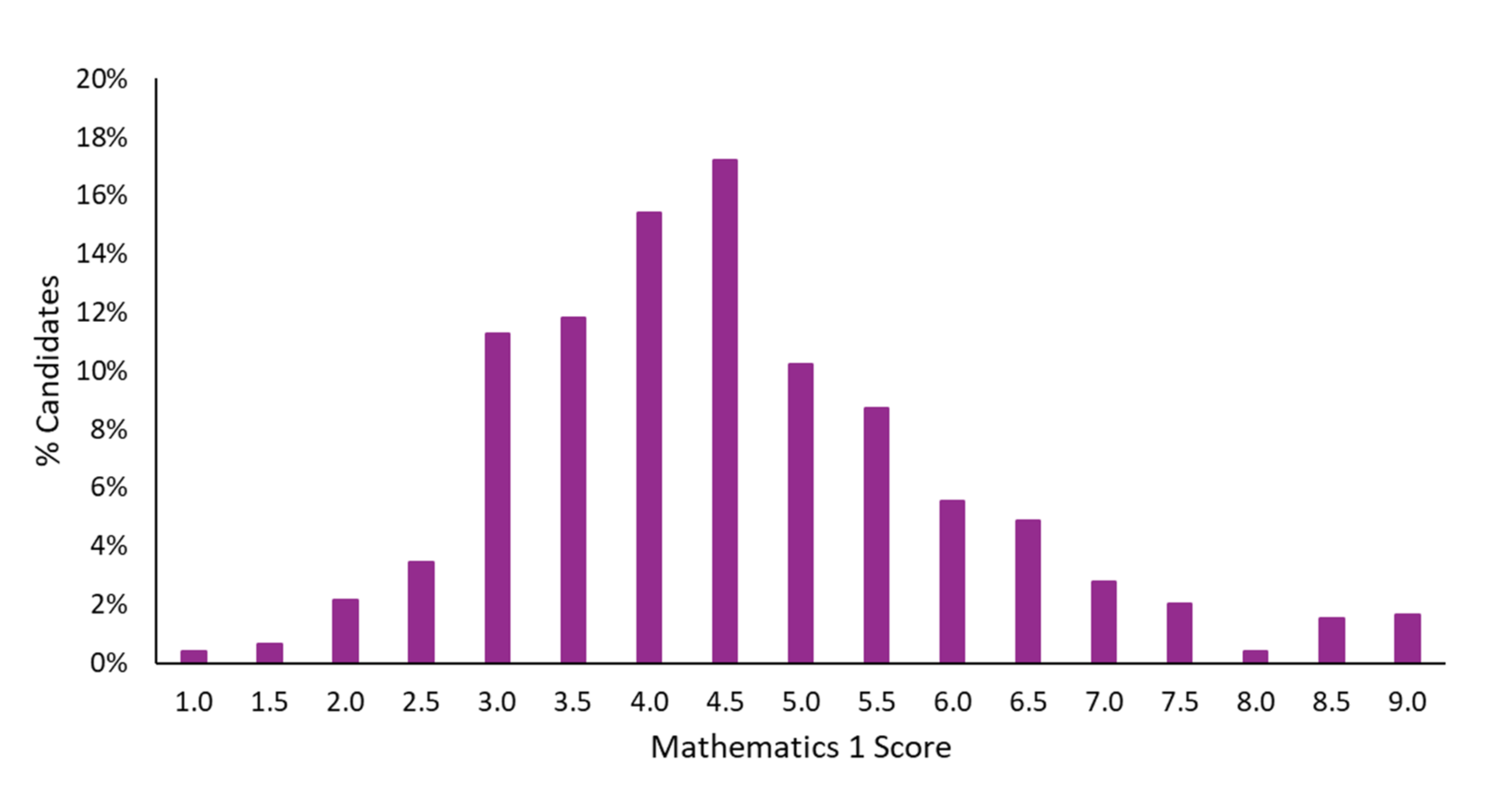
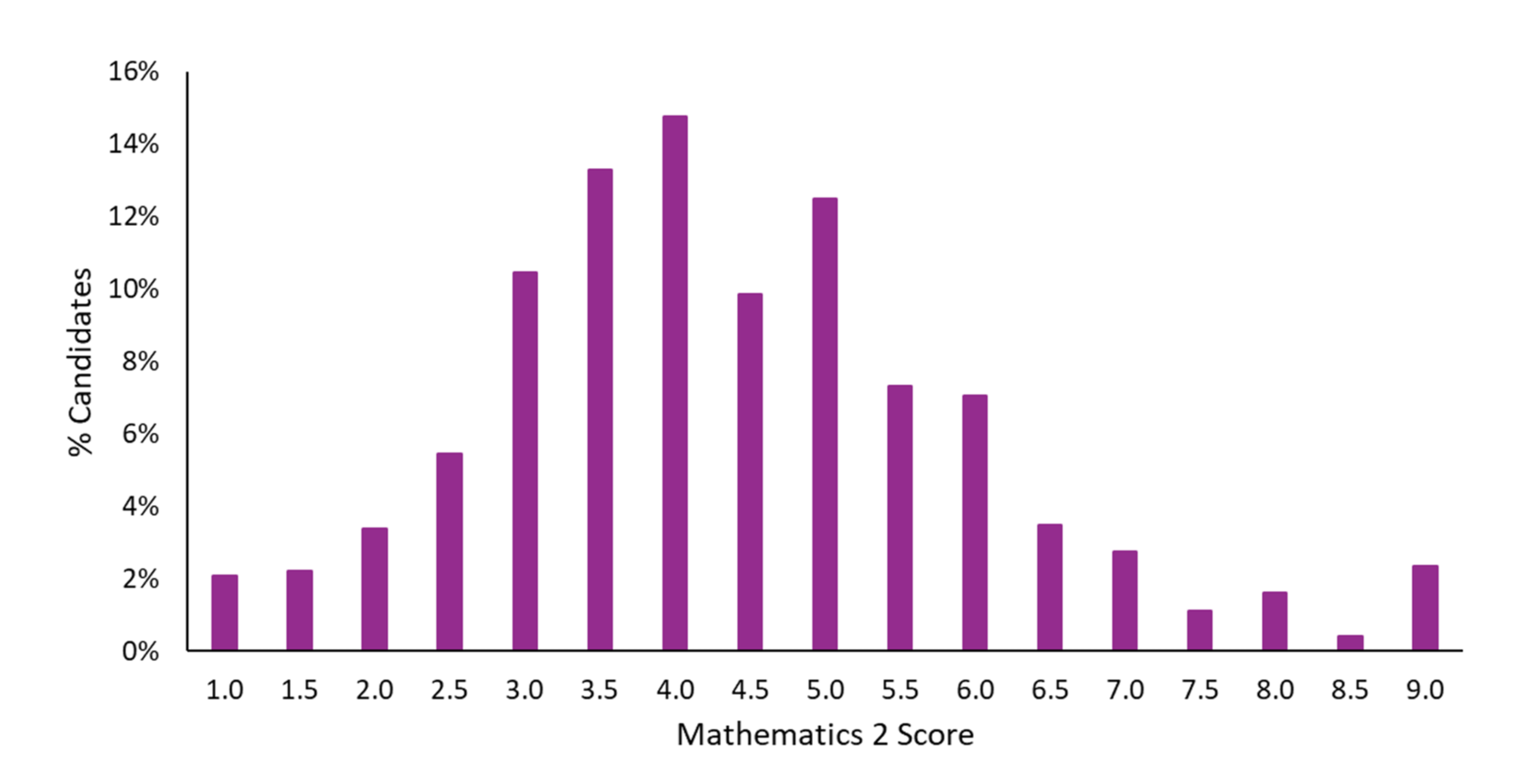
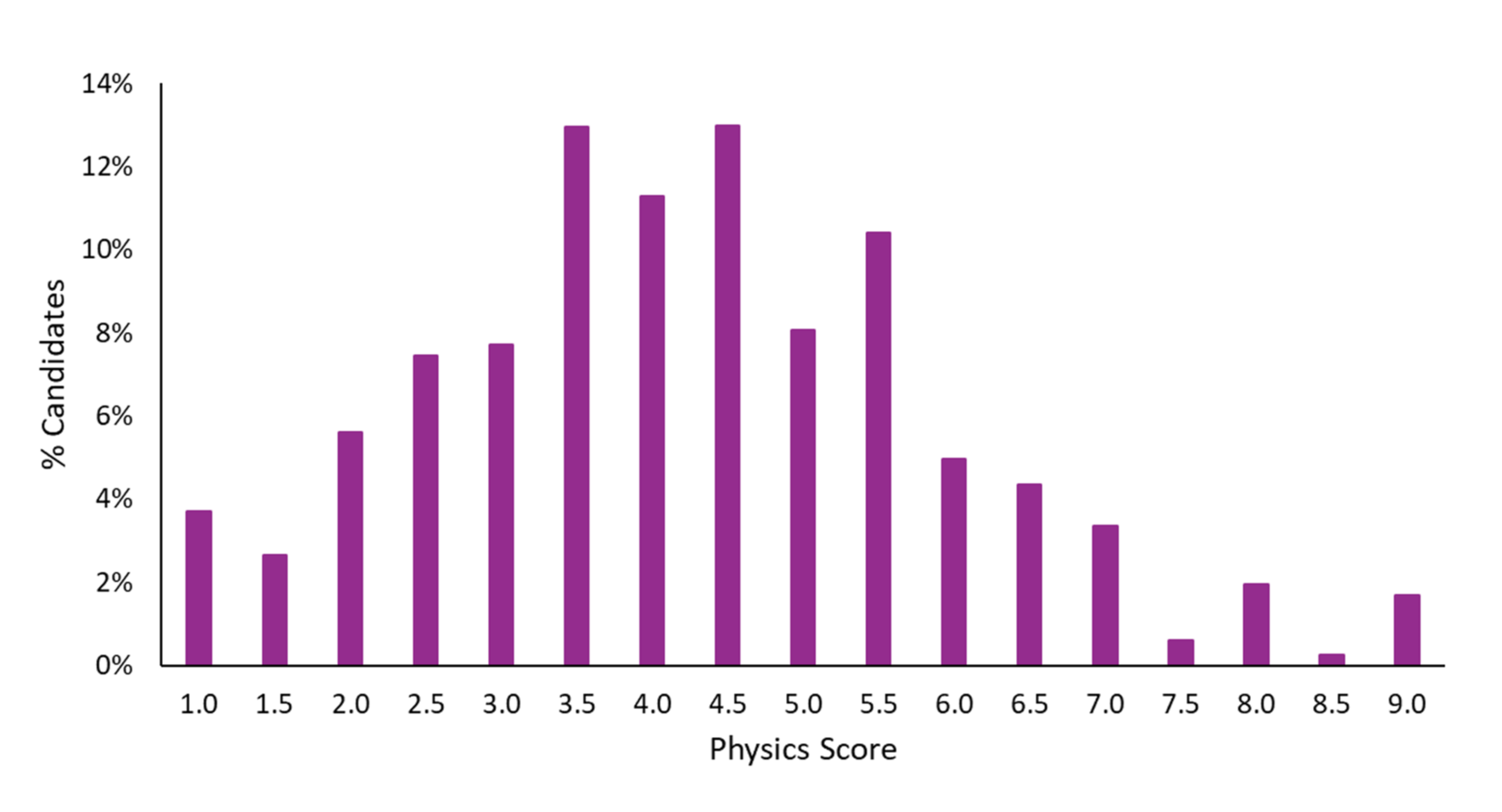
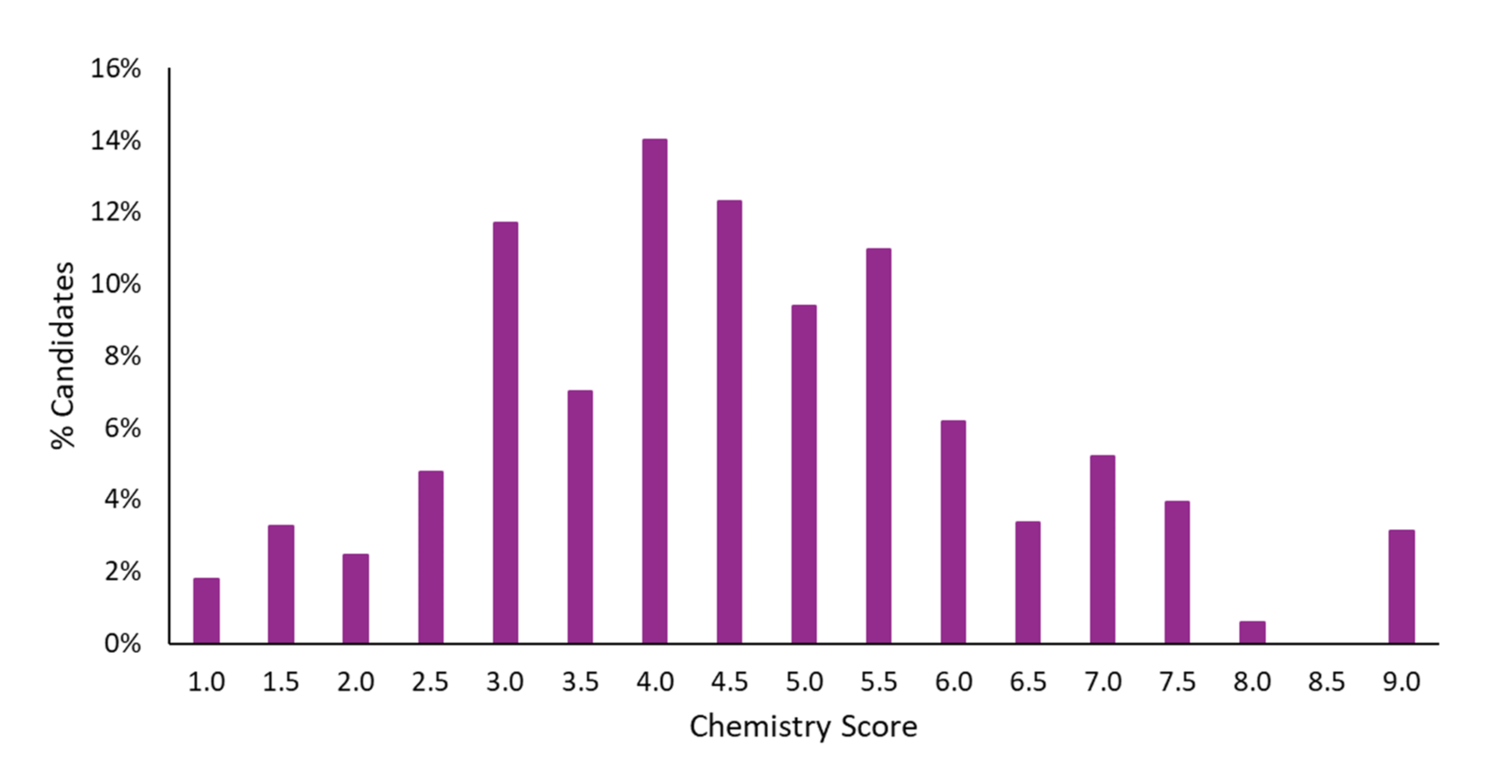
Results for the October 2025 and January 2026 sittings were released on 11 February 2026. UAT-UK publishes a separate distribution for each module, because candidates take different combinations and an overall table wouldn’t compare like with like. The table below shows the percentage of candidates who achieved each score, rounded to the nearest 0.5.
ESAT Results Mathematics 1 2025/26
ESAT Results Mathematics 2 2025/26
ESAT Results Physics 2025/26
ESAT Results Chemistry 2025/26
ESAT Results Biology 2025/26
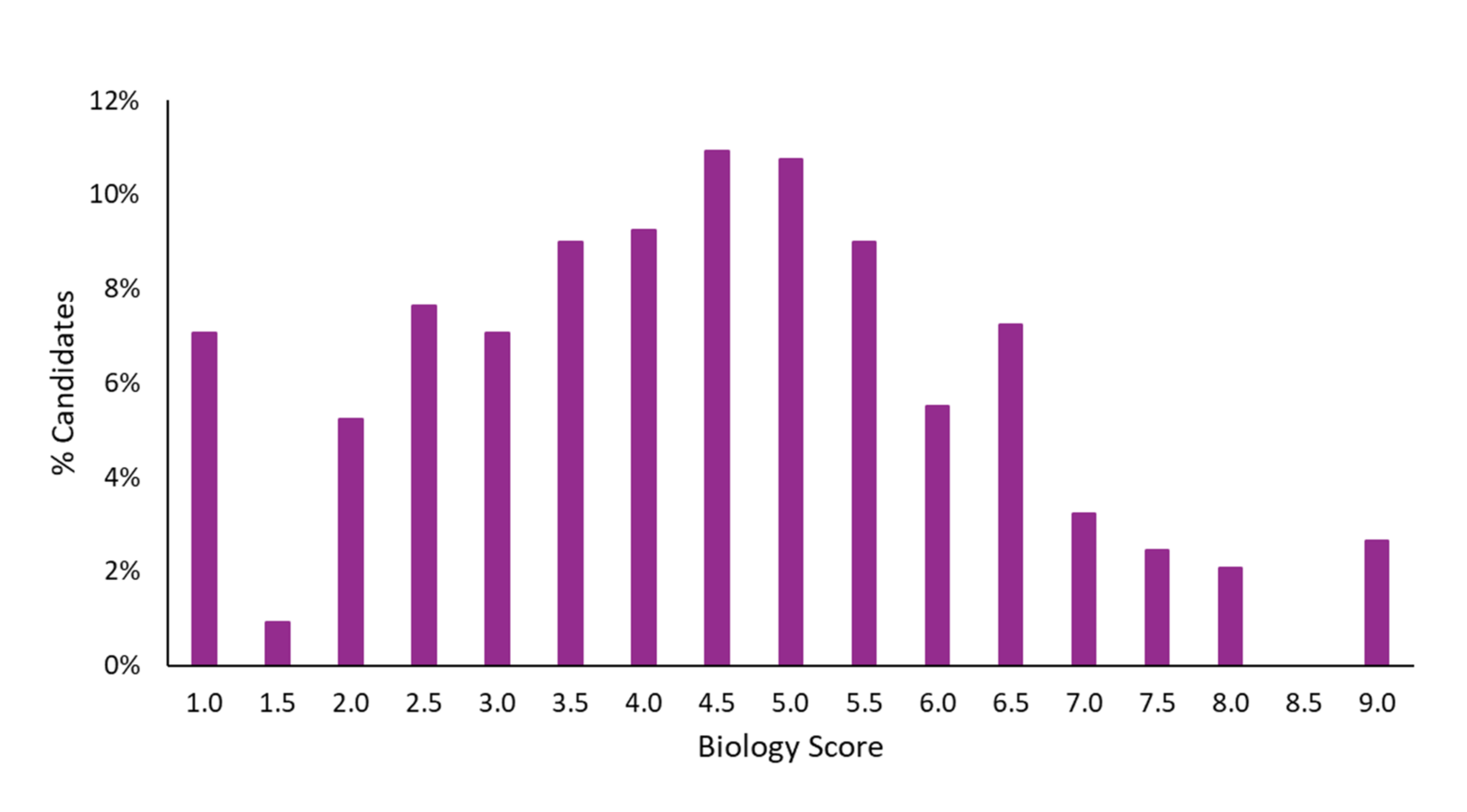
What the 2025/26 results tell us
- The most common scores were 3.5 to 4.5. Mathematics 1 peaked at 4.5 (about 17% of candidates), Mathematics 2 and Chemistry at 4.0, Biology at 4.5, and Physics was split evenly between 3.5 and 4.5 (about 13% each).
- Chemistry and Biology produced the most high scores. About 13% of Chemistry candidates and 10% of Biology candidates scored 7.0 or more, against about 8% in the other three modules.
- Biology had the widest spread. About 7% of Biology candidates scored 1.0, far more than in any other module, yet it also had the largest share at 6.5 or above (about 18%).
- Very high scores were rare everywhere. Between 1.7% and 3.1% of candidates scored 9.0, and nobody scored 8.5 in Chemistry or Biology.
- Scores were slightly lower than in 2024/25. The share of candidates scoring 6.0 or more fell in every module, most noticeably in Physics (about 20% to 17%).
October 2025 Results
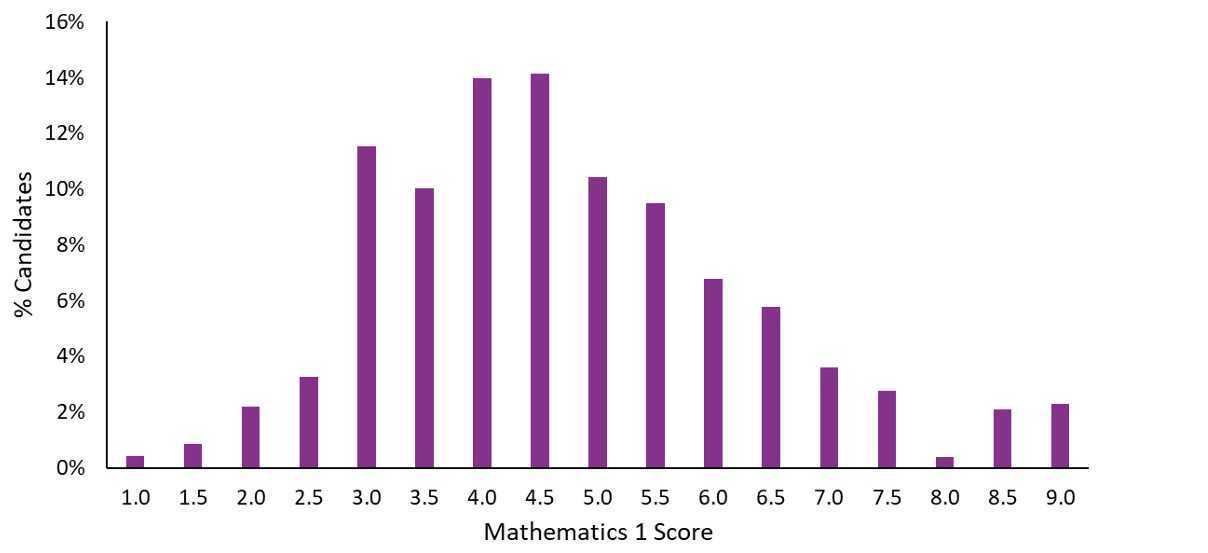
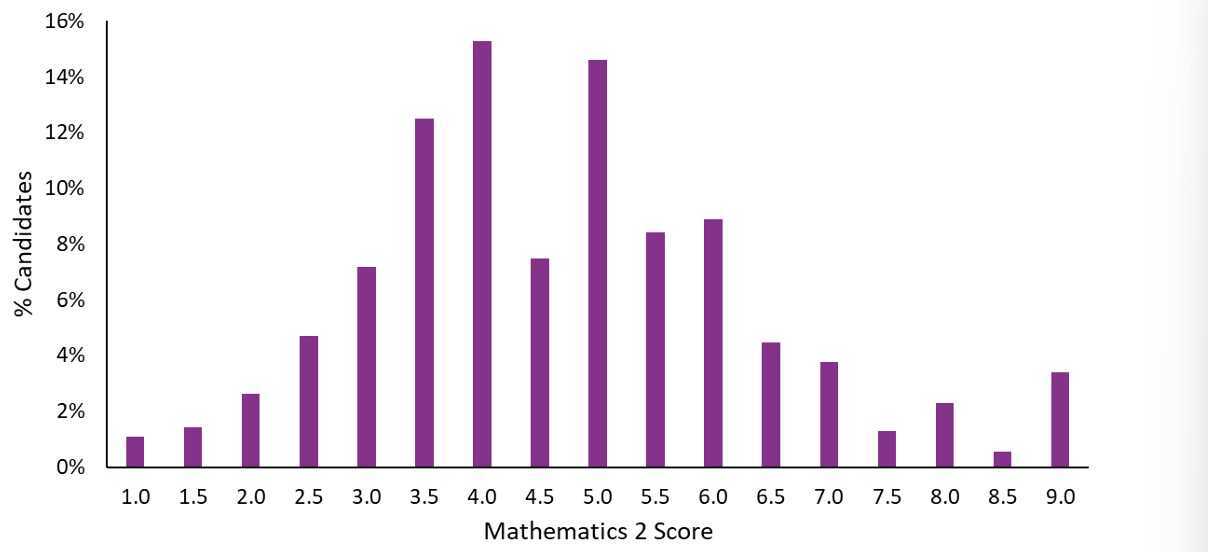
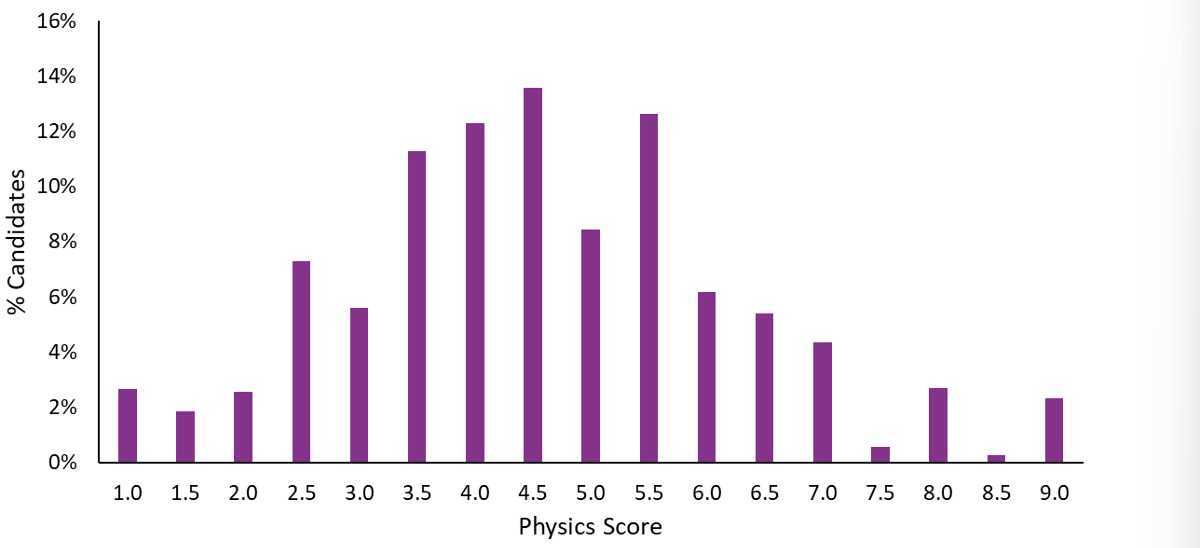
UAT-UK also published the October 2025 results on their own, in November 2025. October candidates scored higher than the full cohort in Mathematics 1, Mathematics 2 and Physics: for example, about 24% scored 6.0 or more in Mathematics 2 in October, against about 19% across both sittings. That suggests January candidates found those modules harder or were a weaker group overall. Chemistry and Biology look almost the same in both sets of results, probably because most candidates for those modules sat in October.
ESAT Results Mathematics 1 October 2025
ESAT Results Mathematics 2 October 2025
ESAT Results Physics October 2025
ESAT Results Chemistry October 2025

ESAT Results Biology October 2025
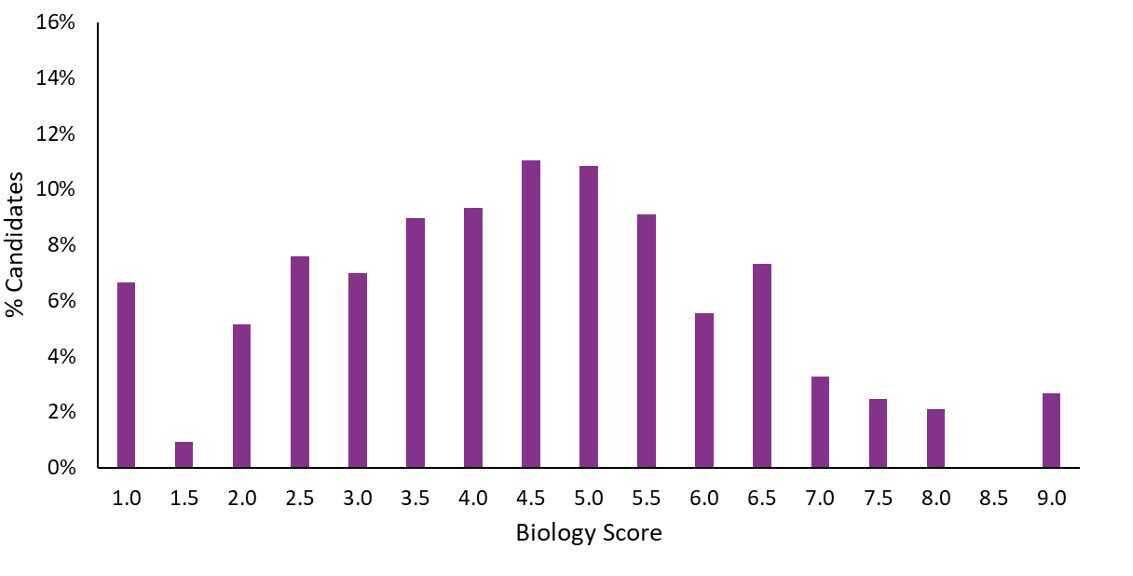
ESAT Results 2024/25
These are the results from the ESAT’s first cycle, sat in October 2024 and January 2025.
ESAT Results Mathematics 1 2024/25
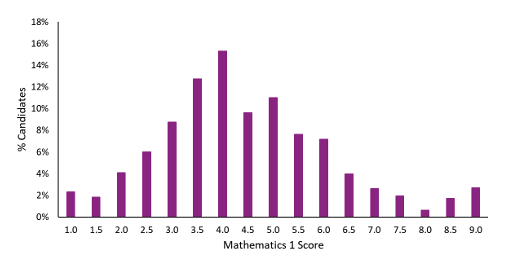
ESAT Results Mathematics 2 2024/25
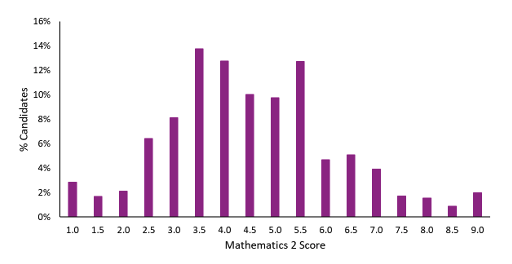
ESAT Results Physics 2024/25
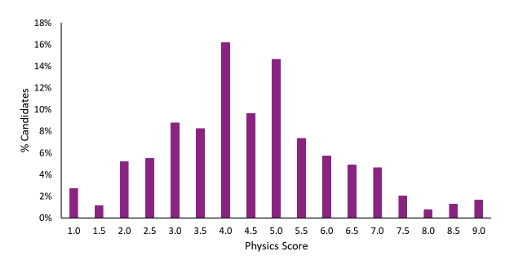
ESAT Results Chemistry 2024/25
ESAT Results Biology 2024/25
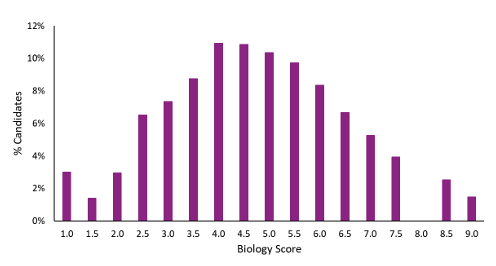
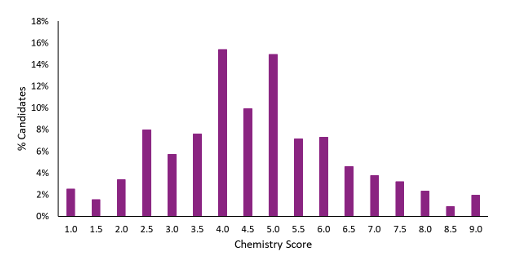
The most common score was 4.0 in every module except Mathematics 2, where it was 3.5 (about 14% of candidates). Between 11% and 16% of candidates scored 4.0 in each module. UAT-UK says typical candidates score around 4.5, but 4.5 wasn’t the most common score in any module.
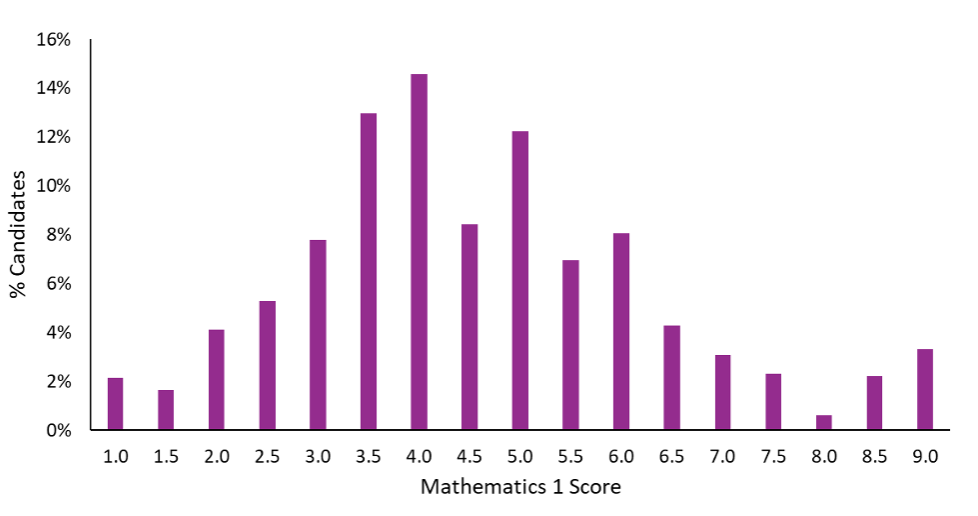
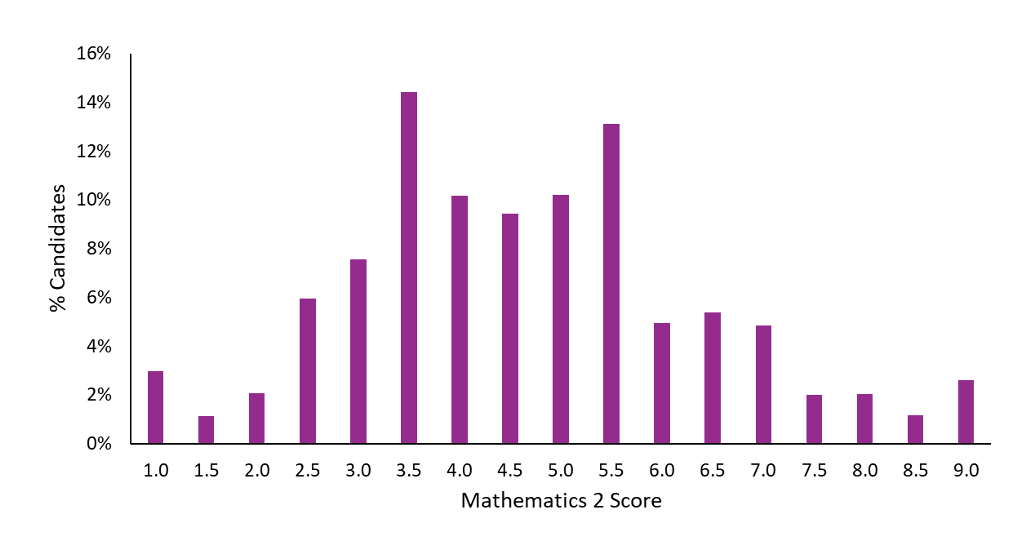
As in 2025/26, October candidates did a little better than the combined cohort. In October 2024, Physics peaked at 5.0 rather than 4.0, and 11–13% of candidates scored 7.0 or more in each module.
ESAT Results Mathematics 1 2024
ESAT Results Mathematics 2 2024
ESAT Results Physics 2024
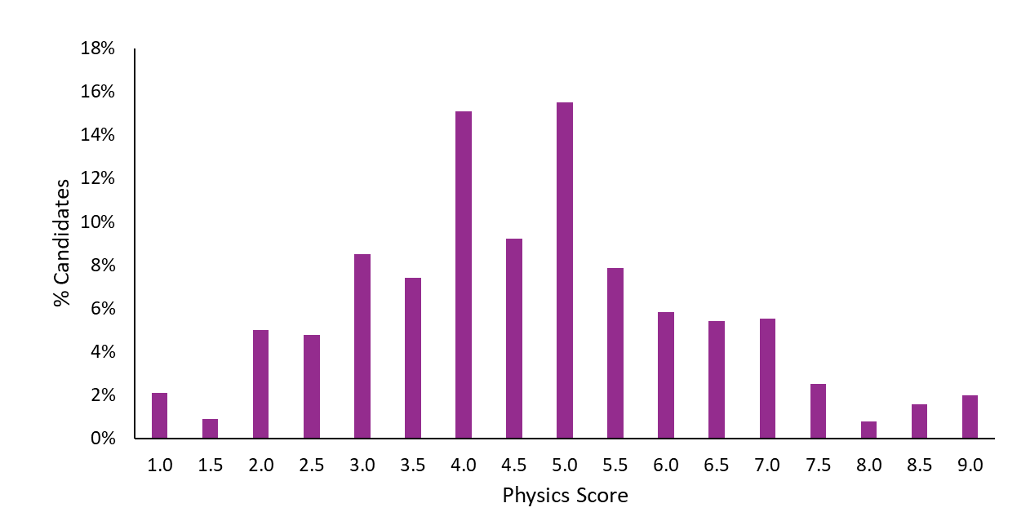
ESAT Results Chemistry 2024
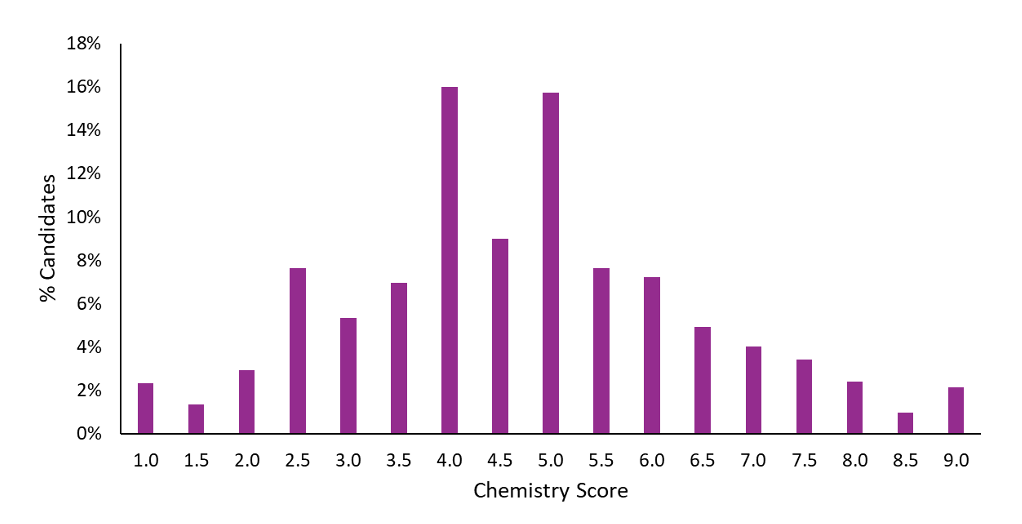
ESAT Results Biology 2024
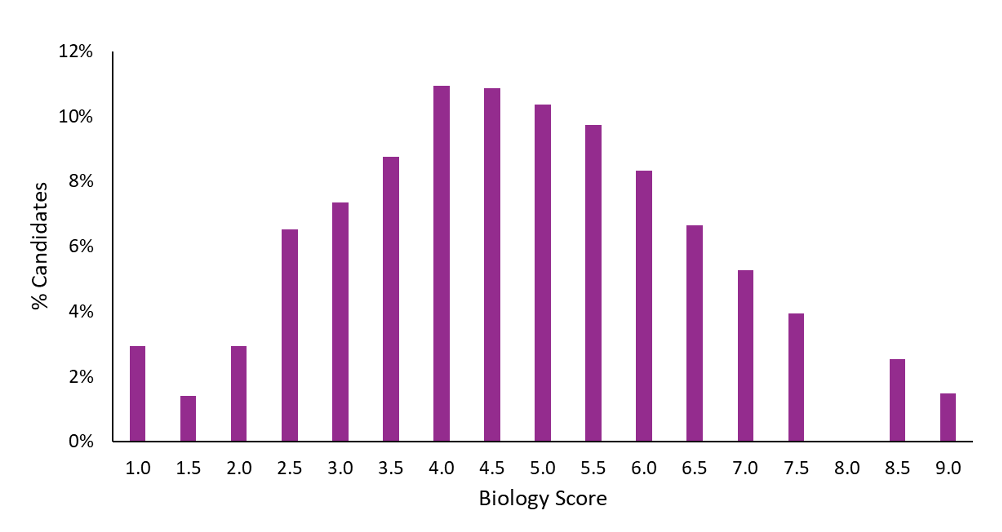
Many of these charts look very similar from the overall results charts, although there are a few notable differences. We can see that the October Physics cohort had a modal score of 5.0 rather than 4.0, indicating that the second paper was harder. We can also see lower scores in the October Mathematics 2 paper versus the overall results.
Which ESAT Subtest is Easiest?
None stands out, and the answer changes from year to year. In both cycles, Chemistry and Biology had slightly more candidates at 6.5 or above than the other modules. Because scores are scaled to account for question difficulty, though, a “high-scoring” module isn’t necessarily an easier one to do well in. Pick your optional modules based on the course requirements and your strongest subjects.
Which ESAT Subtest is Hardest?
Mathematics 2 covers the most advanced content, and in 2024/25 it had the lowest most common score (3.5). In 2025/26, though, Physics had the largest share of candidates scoring 3.5 or below (about 40%), followed by Mathematics 2 and Biology (both about 37%). If you’re taking Mathematics 2, give it extra preparation time.
Interesting ESAT Statistics
- Only about 1.4–3.1% of candidates scored 9.0 in any module across the two cycles.
- In 2025/26, nobody scored 8.5 in Chemistry or Biology. In 2024/25, nobody scored 8.0 in Biology.
- Biology is the only module where 1.0 was a common score: about 7% in 2025/26.
- Every module's median score has been 4.0 or 4.5 in both cycles.
When Are ESAT Results Released?
ESAT results are released about four weeks after you sit the test, in your UAT-UK account.
October 2026 sitting (12–16 October 2026): Oxford says results are due on 16 November 2026.
January 2027 sitting (4–8 January 2027): expect results around four weeks later, in early February 2027. UAT-UK hasn’t confirmed a date yet.
Last cycle, October 2025 results came out on 14 November 2025 and the full 2025/26 results on 11 February 2026.
You don’t need to send your scores anywhere. UAT-UK sends them automatically to the universities on your UCAS application whose courses use the ESAT, shortly after your test. You can’t choose which universities see them, and UAT-UK doesn’t accept appeals against scores.
Feeling Overwhelmed by the ESAT? The Big Book of Oxbridge Applications Makes It Simple.
For many applicants, the ESAT is one of the most demanding parts of the Oxbridge process, not just because of the content, but because it’s a new addition for many courses. Whether you’re encountering it for the first time or looking to refine your preparation, having a clear understanding of what’s expected is key.
The ESAT section of The Big Book of Oxbridge Applications provides a structured, easy-to-follow guide to help you prepare effectively and approach the test with confidence. Inside this free book, you’ll find:
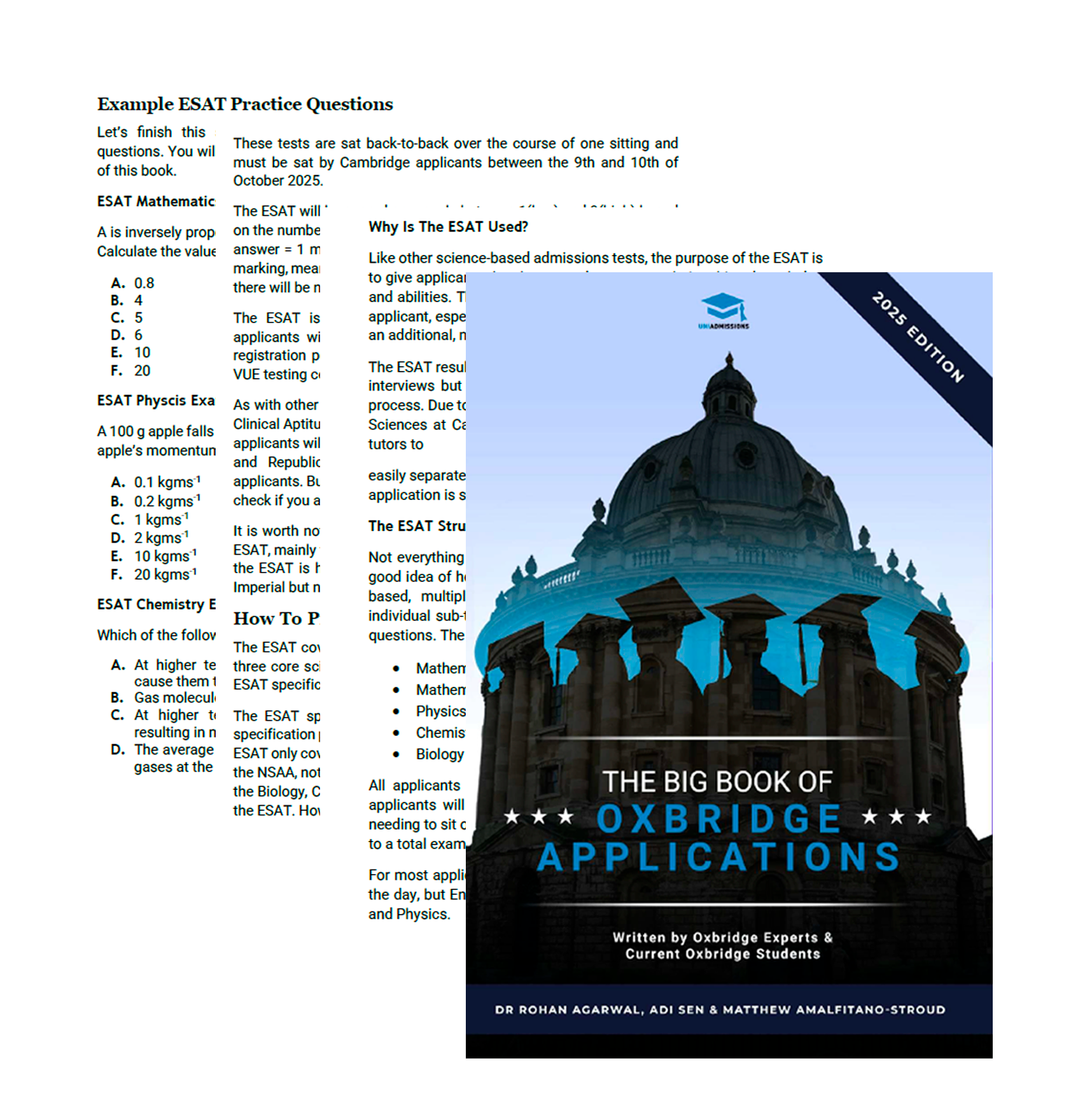
- A detailed explanation of what the ESAT covers
- The latest information on structure, timing, and key dates
- Guidance on how to prepare strategically and stay focused
- Practice questions to help you get familiar with the format and level
- With free ESAT past papers to download
Historical: NSAA & ENGAA Results
Before 2024, Cambridge used the Natural Sciences Admissions Assessment (NSAA) and the Engineering Admissions Assessment (ENGAA) instead of the ESAT.
Both reported scores from 1.0 to 9.0 and published raw-mark conversion tables, which the ESAT doesn’t. We’ve kept the last NSAA conversion data and some past score distributions for reference. They show how scaling used to work, but they don’t predict ESAT scores.
NSAA Results 2021
Unfortunately, we do not have the results from the 2023 sitting of the NSAA publicly available, so we’ll need to go two years back to view the 2021 results. Below are a series of graphs detailing the distribution of scores from every test taker (we are only looking at the Section 1 scores as Section 2 of the NSAA isn’t relevant to the ESAT):
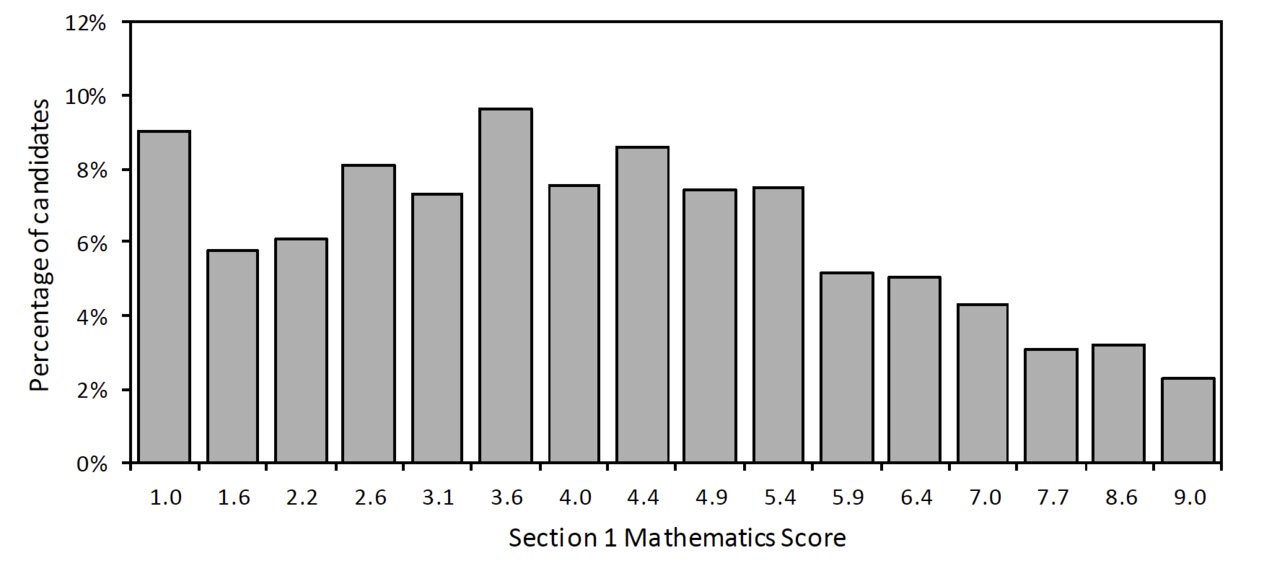
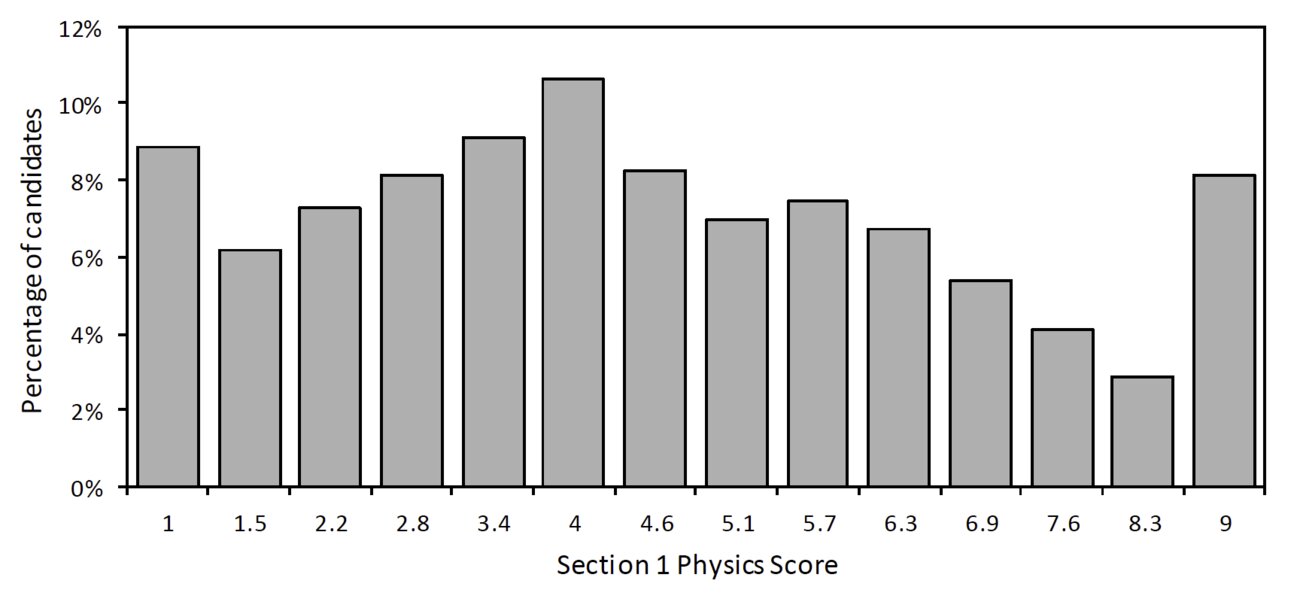
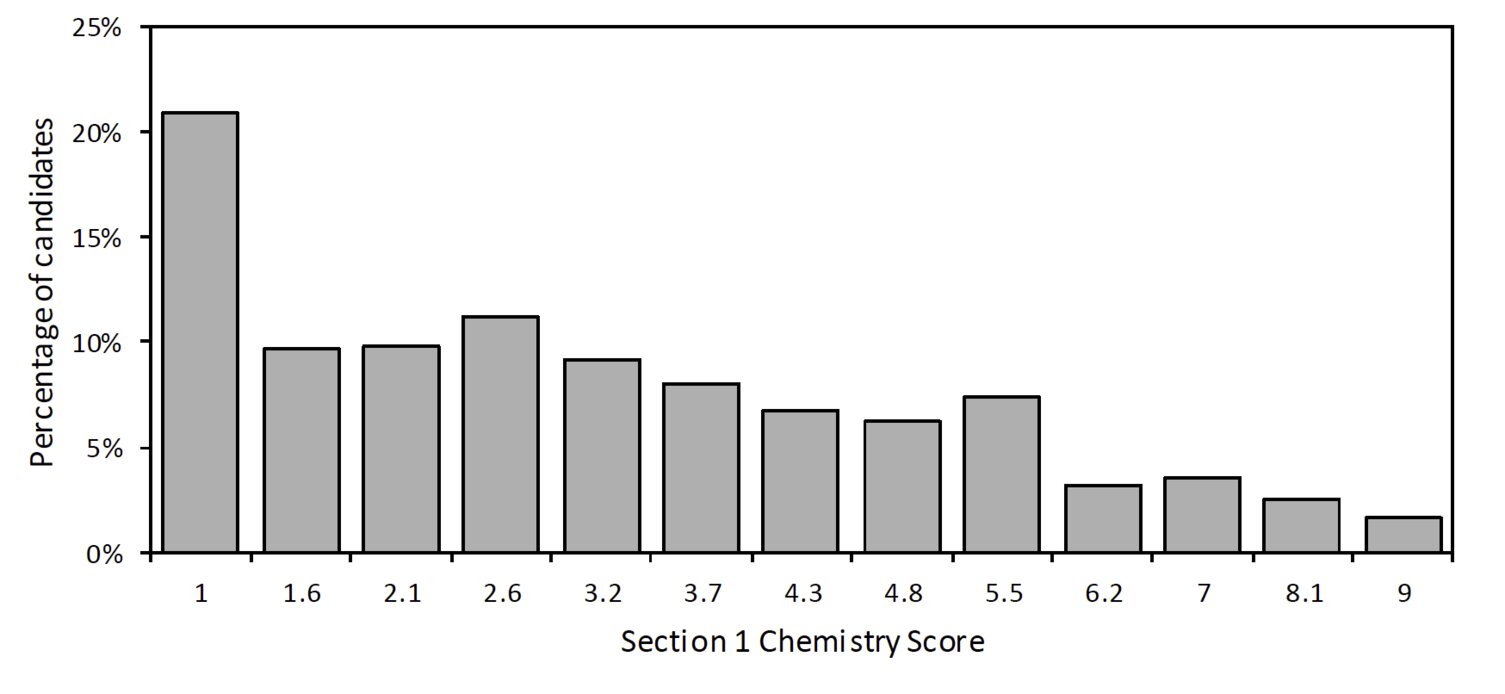
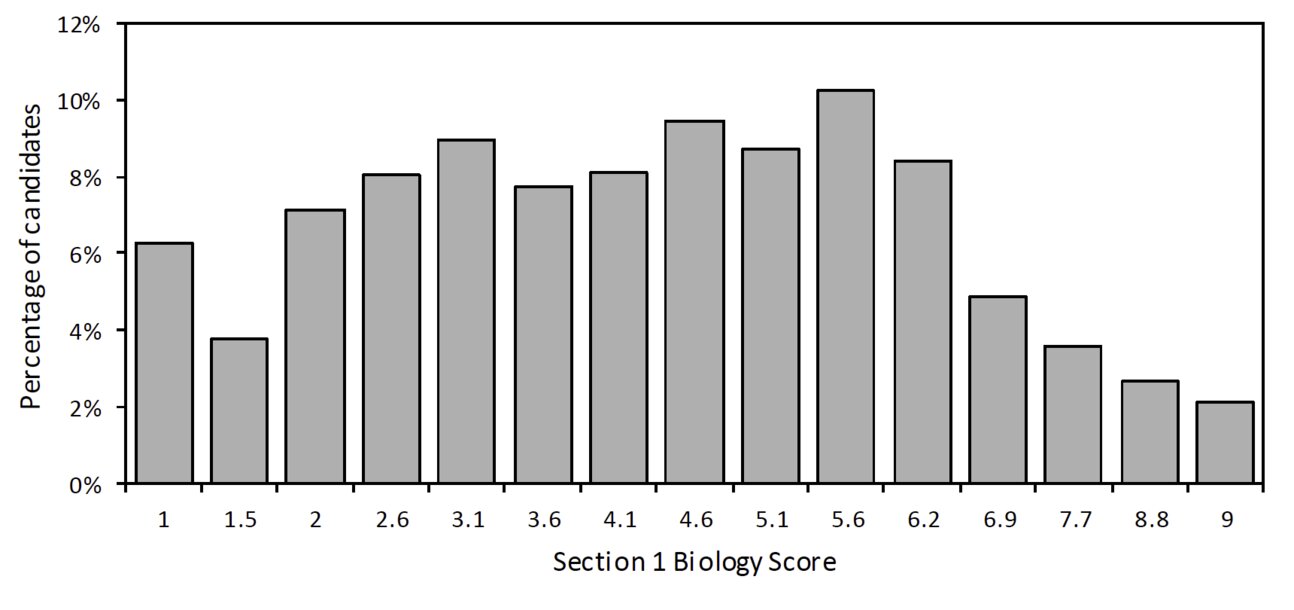
Each graph gives us an insight into how easy or difficult each section was based on the results of the applicants. In each section, we can see a fairly large portion of applicants achieved a score of 1.0, especially in the Chemistry section, in which over 20% of applicants scored 1.0. It’s clear that this was the hardest section of the test.
However, in the Physics Section, around 8% of applicants actually achieved a score of 9.0, meaning this section was slightly easier than normal. The most modal score for this section was 4.0, while the modal score for Biology was 5.6, skewing higher without major outliers like in Physics.
Overall, these results show how varied the different subject in a test can be and how much the score conversion can impact results.
ENGAA Results 2023
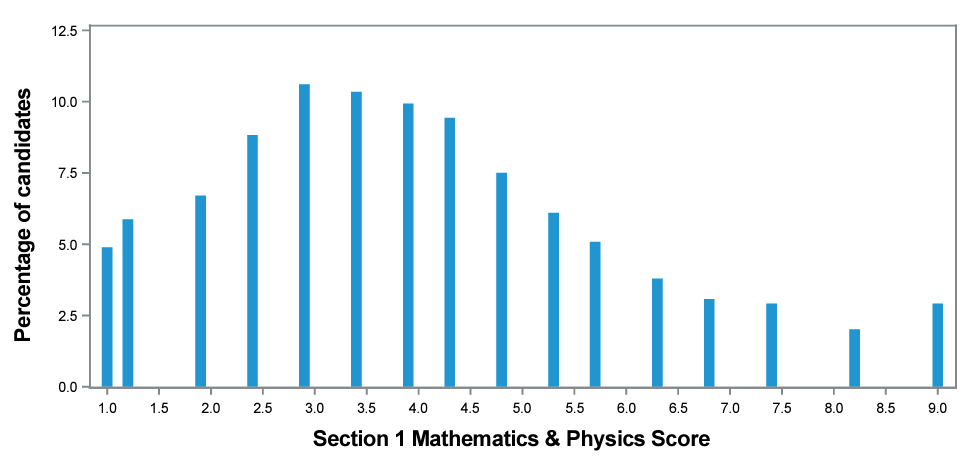
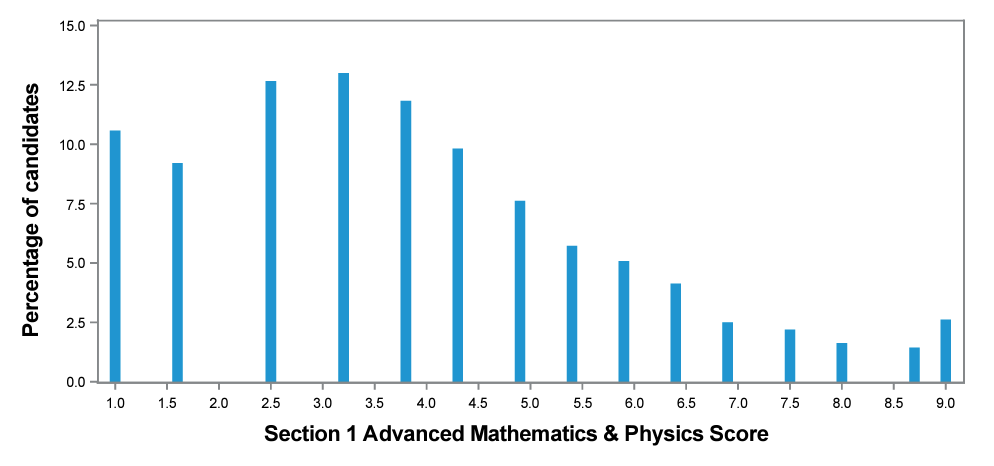
Here, the curves are more consistent but the average score skews even lower, with a modal score of around 3.0 in each subsection. Previous year’s ENGAA results have skewed more central than this, so this indicated that the 2023 sitting of the ENGAA was particularly difficult for applicants.
Conclusion
The ESAT is scored per module from 1.0 to 9.0, with no grade boundaries, and most candidates score between 3.5 and 5.5. Aim for 6.0 or more in each module to be competitive, and 7.0 or more to stand out. Use the tables above to see where your scores sit, but remember that universities look at your whole application, not just the test.
Get the ESAT score you need and earn your offer with support from UniAdmissions
Our ESAT Programme has been designed using our knowledge of Oxbridge and the previous admissions test to provide the most effective support for the ESAT. Through tuition, courses and expert resources, you’ll have everything you need to find ESAT success.
Discover our ESAT Support below and find out how you can enrol and triple your chances of success.


