

The University of Oxford is one of the most selective universities in the world. Each year, it receives over 23,000 undergraduate applications for approximately 3,300 available places, making competition for an offer exceptionally high across most subjects.
The main psychology course at Oxford is particularly distinctive. Unlike many universities, Oxford offers the subject exclusively as Experimental Psychology, a degree grounded in scientific research, experimentation, and systematic observation, rather than introspective or purely theoretical approaches. In addition to lectures and classes, undergraduate students benefit from regular research seminars, with a strong emphasis on areas such as human cognition, neuroscience, language, developmental psychology, social behaviour, and psychological disorders.
As a result, the Oxford Psychology entry requirements reflect not only good grades but also a demonstrated aptitude for analytical reasoning, quantitative thinking, and evidence-based enquiry.
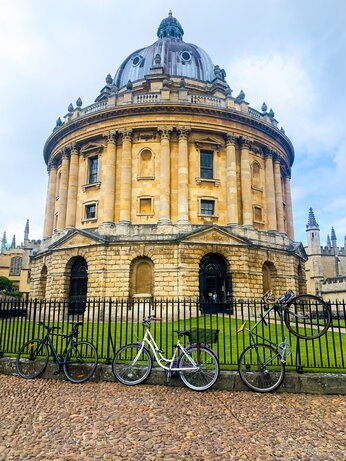
Oxford Psychology Courses
The Psychology courses at the University of Oxford fall into two categories:
- single-subject Experimental Psychology and
- joint degrees within the Psychology, Philosophy and Linguistics (PPL) framework.
While all routes involve the study of Psychology, they differ in structure and focus. Admissions expectations are broadly comparable across these courses, with minor variation in recommended subject backgrounds, particularly for applicants combining Psychology with Linguistics.
Experimental Psychology is Oxford’s core single-subject psychology degree. It is a four-year course leading to an MSci in Experimental Psychology, with the option to exit after three years with a BA degree.
The course is strongly research-led, with substantial emphasis on experimental design, probability theory and statistics, and empirical investigation across cognitive, behavioural, developmental, and social psychology.
Applicants considering this route should be aware that it is the most scientifically intensive psychology course offered by Oxford and the primary focus of discussions around Oxford Psychology entry requirements in this guide.
Oxford also offers Psychology through a set of joint honours degrees within the Psychology, Philosophy and Linguistics (PPL) framework. These courses are interdisciplinary in nature and allow students to combine Psychology with closely related fields.
While it is possible to study papers from all three subject areas (subject to college approval), applicants must apply to specialise in two of the three disciplines:
This is a four-year MSci degree that combines experimental psychology with philosophical analysis, including topics such as knowledge, ethics, and the nature of mind.
This four-year MSci course integrates psychology with the scientific study of language in all its aspects, including areas such as psycholinguistics, language acquisition, and cognition.
This is a three-year BA degree and does not involve a formal psychology specialism, although some psychology-related papers may be taken. As such, it is not typically considered a psychology degree for applicants specifically seeking psychology-focused study.
Secure an offer to study Psychology at Oxford with support from UniAdmissions.
For over a decade, we’ve been getting students into the top univerisities in the UK, including Oxford, Cambridge and more. Through our carefully crafted suite of resources and our vast team of tutors, we will triple your chances of getting your offer.
Discover our Oxford Psychology Preparation Programme by clicking the button below.
Oxford Psychology Entry Requirements
In this section we will outline all the different entry requirements for Oxford’s Experimental Psychology applicants along with any differences across other psychology-related courses at the University.
General GCSE Requirements
While Oxford does not publish formal minimum GCSE grade requirements for Psychology, GCSE performance remains an important contextual factor in the admissions process.
Applicants are strongly recommended to have achieved at least a Grade 7 (A) in GCSE Mathematics (or equivalent), where GCSEs are taken. This reflects the quantitative demands of the Experimental Psychology course, which includes statistical analysis, data interpretation, and experimental design from an early stage.
A-Level Requirements
Applicants for Experimental Psychology and psychology-related courses at the University of Oxford are typically expected to achieve A*AA at A-level (or an equivalent qualification).
While there are no mandatory subject requirements, Oxford recommends that candidates have studied one or more science subjects – which may include Psychology – or Mathematics at A-level or an equivalent level (such as Advanced Higher or Higher Level in the IB).
Where an applicant uses a science A-level to meet their offer and that qualification includes a practical endorsement, Oxford expects the practical component to be passed. This requirement applies regardless of overall grade attainment and forms part of the standard offer conditions.
Applicants without a science or mathematics background should carefully consider the academic demands of the course, as strong analytical and quantitative skills are essential for success.
Typical A-Level Offer
Grades: A*AA
Recommended Subjects: at least one science subject which can include:
- Psychology, or
- Mathematics
- For Psychology and Linguistics (CQ81): English Language, Maths, a science or language.
Alternative Qualifications
The following qualifications are typically accepted as alternatives to A-levels:
Scottish Advanced Highers
For Psychology at Oxford, applicants are expected to achieve AA or AAB.
Typical Advanced Highers Offer: AA/AAB
Recommended Subjects: at least one science subject which can include:
- Psychology, or
- Mathematics
- For Psychology and Linguistics (CQ81): English Language, Maths, a science or language.
International Baccalaureate (IB)
Applicants offering the IB Diploma are typically expected to achieve a total of 39 points, including core points, with a score of 7, 6, 6 at Higher Level (HL).
While there are no mandatory subjects, Oxford highly recommends that applicants take one or more science subjects (including Psychology) or Mathematics at Higher Level.
Either of the below courses will be acceptable:
- Analysis and Approaches (SL or HL)
- Applications and Interpretation (SL or HL)
Typical IB Offer: 39 points with a score of 7, 6, 6 at Higher Level (HL)
Recommended Subjects: at least one science subject:
- Psychology, or
- Mathematics
- For Psychology and Linguistics (CQ81): English Language, Maths, a science or language.
Other UK Qualifications
For applicants who don’t hold/study towards one of the above qualifications, options are limited. For more information, you should consult the University’s official page on alternative UK qualifications.
Other International Qualifications
For overseas applicants or applicants with overseas qualifications: Oxford recognises a range of qualifications for its Psychology courses, including the American Advanced Placement (AP) programme. Overseas applicants are advised to consult Oxford’s official page for detailed guidance specific to their country.
Personal Statement
As part of your Oxford application through UCAS, you will need to submit a personal statement, which can be up to 4,000 characters long. This is your opportunity to demonstrate not only your academic achievements but also the qualities that make you a strong candidate for Psychology. Personal statements for Oxbridge have to be submitted by October 15th, which is much earlier than standard UCAS application deadlines.
Oxford admissions tutors are looking for applicants with intellectual curiosity, initiative, and a genuine understanding of Psychology. Strong grades alone are not enough; successful applicants show evidence of critical thinking, research engagement, and a proactive attitude towards learning.
Oxford admissions tutors are looking for applicants with intellectual curiosity, initiative, and a genuine understanding of Psychology. Strong grades alone are not enough; successful applicants show evidence of critical thinking, research engagement, and a proactive attitude towards learning.
To support your application, we have a dedicated guide on writing a successful personal statement for Psychology at Oxford, highlighting what made past submissions effective and how you can present your skills and interests compellingly.
Test of Academic Reasoning for Admissions (TARA)
As part of your Oxford application you will be expected to prepare for and sit the new computer-based Test of Academic Reasoning for Admissions (TARA). While there are two available sittings for TARA – one in October and one in January – Oxbridge applicants can only sit the test in its October sitting. The January sitting is aimed at applicants to other universities with later application deadlines. Oxford replaced its previously used Thinking Skills Assessment (TSA) with TARA in 2026, for 2027 entry.
Similarly to the TSA, the TARA assesses core academic abilities, such as problem solving, critical thinking, and logical reasoning, but the format and structure are different. For the Problem Solving and Critical Thinking modules there is no negative marking, so it’s always a good practice to try to answer all the questions to the best of your ability. Your essay for the Writing module will be sent to your chosen college, where it may be used at their discretion as part of your application.
What Is a Good TARA Score For Oxford Psychology?
As TARA is one of the newest UAT-UK admissions assessments, score data is still limited. Results from the October 2025 sitting, the first administration of the test, suggest that scores clustered around 4.5 in the Problem Solving module, while the Critical Thinking module showed common scores around 4.5 and 6.0.
While a 70 was regarded as a generally good score for the TSA, when comparing this to the TARA’s scoring system, an applicant who scores at least 6.5 in the TARA might be considered as competitive. These figures should be treated as indicative rather than definitive, particularly as Oxford refines its use of the assessment over time.
Interviews
Everything done up until this stage (including personal statement and admissions test) will be viewed by the admissions team at your chosen Oxford college, who will then shortlist applicants to invite to a round of interviews.
Applicants who perform strongly across the earlier stages of the application process – particularly the admissions test (TARA) and their overall academic profile – have a higher chance of being invited to interview. Interviews at Oxford are a central part of the selection process and are designed to assess academic potential, reasoning ability, and how applicants engage with unfamiliar problems.
Unlike job interviews, Oxford interviews are best understood as academic discussions (with someone who has an in-depth knowledge of the subject). During these interviews, applicants are encouraged to explain their thinking, respond to follow-up questions, and engage critically with new material.
Most interviews in recent years have been held online. Applicants should expect to receive a letter or email indicating whether or not they have been invited for an interview, usually between the middle of November and early December and attend two to three interviews during the main interview period, which usually takes place in early to mid-December. You may be given only a week’s notice that you have been shortlisted, so you should make sure that you are going to be available during this time as interviews cannot be rearranged.
Being invited to an interview at Oxford is a significant academic achievement in its own right, so if you receive an invitation, congratulations. If you are not invited to interview, this unfortunately means that your application has not been successful on this occasion.
Access "The Big Book Of Oxbridge Applications" For FREE
Are you considering applying to Oxford or Cambridge? The Big Book of Oxbridge Applications is your must-have resource. Whether you’re exploring colleges, preparing for admissions tests, mastering your UCAS application, crafting a standout Personal Statement, or aiming for exam success, this free book will be invaluable to your preparation. You’ll find:
- Over 40 admissions test practice questions
- 28 example Oxbridge Personal Statements
- Interviews with Oxbridge students and graduates
- Additional downloadable resources

How Competitive Is Experimental Psychology At Oxford?
According to Oxford’s 2025 Annual Admissions Statistical Report, the University received 23,061 undergraduate applications in 2024, with 3,245 applicants ultimately admitted. A total of 3,793 offers were made, indicating that the majority of offer-holders went on to accept their offer and meet the required conditions, resulting in a relatively small gap between offers issued and final admissions. This context highlights the intense competition across Oxford as a whole.
Oxford's Experimental Psychology Admissions Statistics, 2022-2024
When focusing specifically on Experimental Psychology, the level of competition remains high. Over the three-year period from 2022 to 2024, Experimental Psychology received 714 applications, from which 136 offers were made. Of these, 110 applicants were ultimately admitted.
This corresponds to an offer rate of approximately 19% and a final acceptance rate of around 15.4%. While Experimental Psychology is not among Oxford’s most oversubscribed courses by volume, these figures demonstrate that it remains highly selective, with a clear distinction between applicants who meet the entry requirements and those who are ultimately offered a place.
Applications: 714
Offers: 136
Admitted Students: 110
Offer Rate: 19%
Offer-holder Acceptance Rate: 80.9%
Overall Enrolment Rate: 15.4%
Oxford's PPL Admissions Statistics, 2022-2024
For the Psychology, Philosophy and Linguistics (PPL) course, admissions stats are slightly more encouraging, though still highly competitive. Over the same three-year period, this subject received 410 applications, from which 80 offers were made. 71 applicants were admitted in the end. These numbers correspond to a 19.5% offer rate and a 17.3% acceptance rate.
Applications: 410
Offers: 80
Admitted Students: 71
Offer Rate: 19.5%
Offer-Holder Acceptance Rate: 88.8%
Overall Enrolment Rate: 17.3%
Is Oxford or Cambridge Better For Psychology?
Cambridge’s Psychological and Behavioural Sciences (PBS) BA offers a broad, interdisciplinary approach, allowing students to study core Psychology alongside optional papers in philosophy, politics, education, and criminology. In comparison, Oxford’s Experimental Psychology degree places a particularly strong emphasis on experimental design, research-led study, and quantitative methods from the outset. While Cambridge provides interdisciplinary breadth, Oxford offers structured pathways such as the Psychology, Philosophy and Linguistics (PPL) joint honours, which are more narrowly defined.
This focus makes Oxford especially suitable for students who want to engage deeply with experimental psychology and develop strong research skills early in their studies. Cambridge may appeal more to applicants looking for thematic breadth across psychological and behavioural sciences. Both universities are highly competitive, so the choice depends on whether you prefer a research-intensive, experimentally focused course (Oxford) or a wider interdisciplinary programme (Cambridge).
For applicants considering both universities, we also provide a dedicated guide covering the entry requirements for Psychology at the University of Cambridge.
Conclusion
Psychology at the University of Oxford is a highly selective, academically demanding course that rewards applicants with strong analytical ability, scientific curiosity, and a genuine engagement with psychological research. As this guide has shown, meeting the Oxford Psychology entry requirements involves more than achieving excellent grades; success depends on demonstrating the skills and mindset needed to thrive in a research-led academic environment.
From subject choices and admissions tests to interviews and personal statements, each stage of the process plays a critical role in identifying applicants with the greatest academic potential. With offer rates well below 20%, even strong candidates benefit from strategic preparation and informed guidance when applying to Oxford Psychology.
If English is not your first language you may also need to meet Oxford’s English Language Requirements.
UniAdmissions’ Oxford Psychology Programme is designed to support applicants at every stage of the process – from TARA preparation to personal statement development and interview practice. Through expert-led guidance and tailored academic support, we help students present the strongest possible application and triple their chances of success.
Our expert tutors will guide you to Oxford success
If you want to compete amongst the top applicants for Psychology at Oxford, you’ll need support from experts.
Discover our Oxford Psychology Full-Blue Programme for comprehensive admissions support by clicking the button below to enrol and triple your chances of success.
fAQs
Is Psychology at Oxford the same as Psychology at other universities?
No. Oxford offers Psychology exclusively as Experimental Psychology, which places far greater emphasis on scientific research, experimental methods, and statistical analysis than many applied or clinical-focused psychology degrees offered elsewhere.
Do I need A-level Psychology to apply to Oxford?
No. A-level Psychology is not required, and many successful applicants do not study it. However, Oxford strongly recommends at least one science subject or Mathematics, reflecting the quantitative nature of the course.
How important is the admissions test (TARA) for Oxford Psychology?
TARA plays a significant role in shortlisting for interviews, particularly given the volume of highly qualified applicants. While there is no official cut-off score, strong performance can substantially improve your chances of progressing in the selection process.
What if I meet the entry requirements but don’t get an offer?
Meeting the entry requirements does not guarantee an offer. Oxford Psychology is extremely competitive, and selection is based on relative academic performance, admissions test results, interviews, and overall academic potential. Many well-qualified applicants are unsuccessful each year due to the limited number of places available.

