


The Bartlett School of Architecture at University College London (UCL) is widely regarded as one of the world’s leading institutions for architectural education. Each year, thousands of students apply for a limited number of undergraduate places, making the admissions process highly competitive.
Success in a UCL Architecture application depends on far more than academic performance alone. While strong grades are essential, equal emphasis is placed on creative thinking, design process, and a well-developed portfolio that demonstrates intellectual curiosity and architectural potential.
This guide provides a comprehensive overview of UCL Architecture entry requirements. We’ll cover academic expectations, acceptance rates, portfolio requirements, and the wider application process, to help you understand what it really takes to submit a competitive application.
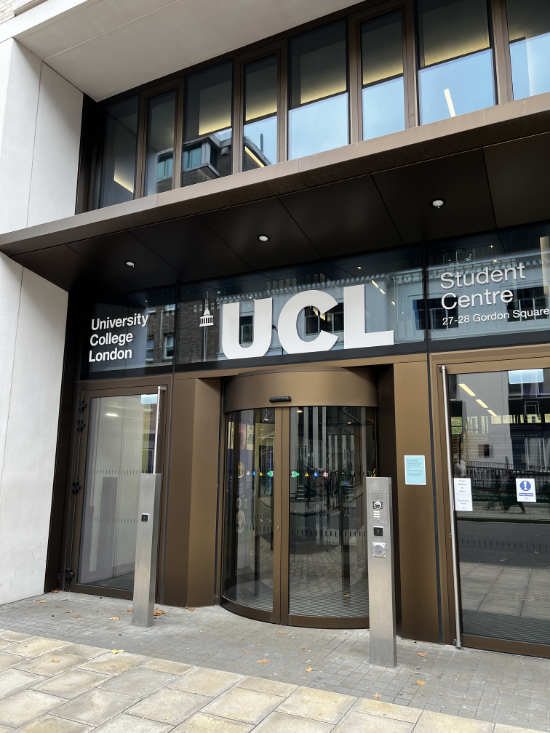
UCL Architecture at a Glance
UCL Architecture is taught at the Bartlett School of Architecture, which forms part of the UCL Bartlett Faculty of the Built Environment, one of the eleven faculties that make up University College London.
Known for its design-led approach and emphasis on both critical thinking and creative exploration, Bartlett consistently ranks among the top architecture schools globally and is recognised for shaping influential architects, researchers, and designers.
The Bartlett School of Architecture – Reputation and Academic Standing
Bartlett has built its reputation on combining experimental design, theoretical rigour, and socially engaged practice. Its teaching approach encourages students to question conventional architectural solutions and to explore how architecture responds to cultural, environmental, and technological challenges.
At undergraduate level, the school places particular emphasis on studio-based learning, where students develop projects through iterative design, research, and critique. This approach means that applicants are assessed not only on their academic ability, but also on their capacity for creative exploration and independent thought.
Architecture Degrees Offered at UCL
BSc Architecture
This is UCL’s core undergraduate architecture course. It is a three-year, full-time programme focused on architectural design through a rigorous, design-led and experimental approach, that encourages students to develop an independent architectural identity.
The BSc Architecture at UCL provides exemption from RIBA Part 1 and represents the first formal stage towards qualifying as a registered architect in the UK . The course combines architectural history and theory, technology, and professional studies with intensive studio-based design work.
Please note that the pathway to registration as an architect in the UK may be subject to change by the Architects Registration Board (ARB). Applicants are advised to consult the ARB’s official guidance for the most up-to-date information.
MSci Architecture
This is a five-year integrated master’s degree that develops advanced architectural design skills alongside a critical understanding of the social, cultural, and professional contexts in which buildings are produced.
The MSci Architecture offers exemption from both RIBA Part 1 and Part 2. It includes a compulsory year in professional architectural practice, allowing students to gain industry experience while progressing academically. This pathway is designed for students seeking a more continuous route towards professional qualification.
Please note that the pathway to registration as an architect in the UK may be subject to change by the Architects Registration Board (ARB). Applicants are advised to consult the ARB’s official guidance for the most up-to-date information.
BSc Architectural and Interdisciplinary Studies with Year Abroad Option
This degree is offered as either a three-year, full-time course or a four-year programme that includes a compulsory year of study at an approved overseas university.
It combines the study of architecture with interdisciplinary subjects such as anthropology, economics, and psychology, allowing students to select modules from across UCL and tailor their studies according to individual academic interests and career aspirations within and beyond the built environment.
MEng Engineering & Architectural Design
This is a four-year integrated interdisciplinary master’s degree that combines architectural design and creative thinking with engineering principles applied to the built environment. Developed in collaboration with industry and academic partners, the course integrates design and technical expertise to address complex challenges in contemporary practice.
What Kind of Architecture Students Is Bartlett Looking For?
This guide focuses primarily on the two core architecture courses at UCL: BSc Architecture and MSci Architecture. While both courses share identical academic entry requirements, applications are assessed with slightly different emphases.
For both programmes, applicants are expected to demonstrate creative ability and critical thinking in spatial design, alongside a strong awareness of the relationship between the built environment and the natural world. Applicants are also expected to show genuine curiosity and a desire to contribute positively to society through the subject.
Applicants to the MSci Architecture course are additionally expected to demonstrate a clear understanding of environmental and ecological sustainability in relation to architecture, as well as a strong interest in, and suitability for, the research-led nature of the degree.


Secure an offer to study Architecture at UCL with support from UniAdmissions.
For over a decade, we’ve been getting students into the top univerisities in the UK, including UCL. Through our carefully crafted suite of resources and our vast team of tutors, we will triple your chances of getting your offer.
Discover our Full-Blue UCL Preparation Programme by clicking the button below.
UCL Architecture Entry Requirements (BSc, MSci)
GCSE Requirements
Applicants must hold:
- GCSE English Language at grade C / 4 or above
- GCSE Mathematics at grade C / 4 or above
These GCSE requirements apply to both standard and contextual offers.
A-Level Requirements
The standard A-level offer for UCL Architecture (BSc and MSci) is AAB.
There are no compulsory subjects, but applicants should note that at least two A-level subjects must be taken from UCL’s list of preferred A-level subjects. For Arts and Humanities, the list includes:
- Arabic
- Art and Design
- Art and Design: 3D Design
- Art and Design: Critical and Contextual Studies
- Art and Design: Fine Art
- Art and Design: Graphic Design
- Art and Design: Photography
- Art and Design: Textiles
- Bengali
- Biblical Hebrew
- Business Studies
- Cantonese
- Chinese
- Classical Civilisation
- Classical Greek
- Drama (WJEC specification)
- Drama and Theatre Studies
- Dutch
- English Language
- English Language and Literature
- English Literature
- English Literature (specifications A or B where applicable)
- Film Studies
- French
- German
- Greek
- Gujarati
- Hindi
- History of Art
- History of Art and Design
- Information and Communication Technology
- Irish
- Italian
- Japanese
- Latin
- Media Studies
- Modern Greek
- Modern Hebrew
- Moving Image Art (CCEA specification)
- Music
- Panjabi
- Persian
- Philosophy
- Polish
- Portuguese
- Religious Studies
- Russian
- Spanish
- Tamil
- Turkish
- Urdu
- Welsh
- Welsh (Second Language)
Note that a comprehensive portfolio of creative work is required and will be requested upon invitation, typically after your UCAS application stage.
Contextual A-Level Offer
UCL operates a contextual admissions scheme designed to support students who may have faced educational disadvantage.
For eligible applicants, the contextual A-level offer for Architecture is BBC.
The subject requirements remain the same:
- No compulsory subjects
- At least two A-levels from UCL’s list of preferred subjects
- A portfolio of creative work required upon invitation
Alternative Qualifications
UCL welcomes applications from students offering a range of UK qualifications beyond A-levels, provided the academic requirements are met and a strong portfolio of creative work is demonstrated when requested.
International Baccalaureate (IB)
- 36 points overall
- 17 points across three Higher Level subjects
- No Higher Level score below 5
Access to Higher Education Diploma
- Pass in the Access to HE Diploma
- A minimum of 30 Level 3 credits at Distinction and 15 Level 3 credits at Merit
- All credits must be from Level 3 units
- A comprehensive portfolio of creative work is required upon invitation at the application stage
BTEC Qualifications
- BTEC Level 3 Extended Diploma (QCF) or
- BTEC Level 3 National Extended Diploma (RQF) (teaching from 2016)
- Required grades: Distinction, Distinction, Distinction (DDD)
- A comprehensive portfolio of creative work is required upon invitation at the application stage
Cambridge Pre-U
- D3, D3, M1 in three Cambridge Pre-U Principal Subjects
- No specific subjects are required
- A comprehensive portfolio of creative work is required upon invitation at the application stage
Scottish Qualifications
- A, A, B at Advanced Higher, or
- A, A at Advanced Higher and B, B, B at Higher
- No specific subjects are required
- A comprehensive portfolio of creative work is required upon invitation at the application stage
UAL Extended Diploma
- UAL Level 3 Extended Diploma in Art & Design
- Final overall grade of Distinction
- A comprehensive portfolio of creative work is required upon invitation at the application stage
International Qualifications And English Language Requirements
Equivalent International Qualifications
UCL accepts a range of equivalent international qualifications. For information specific to your country, you should consult the university’s Region Search page.
English Language Requirements
If English is not your first language and/or do not have have one of the following, you will need to sit an English Language Proficiency test. The required English proficiency level for Architecture at UCL is currently Level 1 (previously referred to as “Standard Level”).
- 12 months education which leads to an academic qualification in a majority English-speaking country
- An English language qualification or test result accepted by UCL
- Completed a school leaving qualification containing English, accepted by UCL
UCL Architecture Personal Statement
As part of your UCAS application you will need to submit a personal statement. While your portfolio demonstrates how you think and design visually, the personal statement explains:
- why you want to study architecture
- why you wish to study at Bartlett/UCL
- what relevant work experience you have if any
- your career aspirations, any extracurricular or voluntary activities relevant to architecture, how you think critically about the built environment.
What UCL Looks for in an Architecture Personal Statement
When crafting your personal statement for architecture at UCL, it might be helpful to think about what UCL is really looking for in prospective students.
Instead of generic enthusiasm for architecture, admissions tutors want to see intellectual curiosity, reflective thinking, and a clear understanding of architecture as a discipline that sits at the intersection of design, society, and the natural world.
Secure an offer to study Architecture at UCL with support from UniAdmissions.
For over a decade, we’ve been getting students into the top univerisities in the UK, including UCL. Through our carefully crafted suite of resources and our vast team of tutors, we will triple your chances of getting your offer.
Discover our Full-Blue UCL Preparation Programme by clicking the button below.
Does UCL Require a Portfolio for Architecture?
Yes. All applicants to UCL’s BSc and MSci Architecture courses are required to submit a portfolio as part of their overall application. The portfolio is a central component of the admissions process, used to assess an applicant’s creative potential, design thinking, and understanding of spatial relationships, beyond what can be inferred from grades alone.
Once UCL has established that you meet (or are likely to meet) their essential entry requirements typically through your UCAS application, they will then contact you to request a digital portfolio of creative work of up to ten pages. If you have applied for both Architecture BSc and Architecture MSci, you will only be asked to submit one portfolio.
Academic qualifications will be fully assessed following the receipt of your Portfolio and your application and Portfolio will not be considered further if your qualifications do not meet the advertised requirements for the programme you have applied for.
If you meet the programme advertised requirements and your Portfolio is successful, you will then be invited for an interview.
UCL Architecture Portfolio Requirements
Bartlett evaluates portfolios with an emphasis on the process of conceptual design, rather than only the polished final product. Key aspects include:
Design thinking
Demonstrating your ability to think creatively, intellectually and three-dimensionally, and to draw and utilise a range of different media. Admissions tutors look for evidence that applicants can generate concept ideas, explore possibilities, and make informed design decisions.
Process over polish
While presentation matters, your portfolio should primarily illustrate how you develop concepts, work through challenges, and refine ideas, typically through work completed outside of A-level, IB or GCSE courses. Annotated sketches, concept diagrams, 3D digital work, and iterative work are highly valued.
Although perfection is not what is expected, it’s important to consider presentation – for example, you should scan or photograph your work at a high resolution, so the qualities of the original pieces are not lost.
Critical and spatial awareness
Portfolios should convey an understanding of space, proportion, context, and human experience. Tutors seek evidence that applicants can analyse environments, visualise architectural solutions, and consider how designs interact with the world around them.
Skills and Qualities the Bartlett Values
Successful portfolios often reflect a combination of technical skill, creativity, and intellectual engagement. The Bartlett places particular emphasis on:
Curiosity, creativity and originality
Innovative ideas, personal style, and imaginative approaches to design problems.
Iteration and reflection
Evidence of exploring multiple solutions, evaluating outcomes, and refining work thoughtfully.
Visual communication
Ability to clearly and effectively convey ideas through drawings, diagrams, models, or other media, showing both conceptual clarity and attention to detail.
UCL Architecture Interview
Everything done up until this stage will be reviewed by the admissions team. If you meet the entry requirements and your portfolio is successful, you will then be invited for an interview.
Interviews for undergraduates at Bartlett are all currently taking place online from mid-November to late April. During these interviews, applicants will have a chance to discuss the course with tutors and explain why they want to study at Bartlett.
How to Prepare for a UCL Architecture Interview
Effective preparation involves reflection rather than memorisation:
- Be ready to talk through your portfolio projects, including early sketches, iterations, and challenges
- Reflect on what you have learned from your work and how it has shaped your thinking
- Revisit your personal statement and ensure you can expand on the ideas you introduced
- Familiarise yourself with the Bartlett’s ethos and teaching approach, without trying to “perform” or impress
UCL Architecture Acceptance Rate – How Competitive Is It?
Architecture is consistently one of the most competitive undergraduate courses at UCL and beyond.
2025 Entry Acceptance Rate
For 2025 entry, the course received 3,109 applications, made 385 offers, and enrolled 232 students. This equates to an offer rate of 12.4% and an acceptance rate of 7.5%.
2024 Entry Acceptance Rate
The previous year shows a similar pattern: for 2024 entry, UCL Architecture received 3,152 applications and had an offer rate of 11.6% and an acceptance rate of 6.7%, confirming that competition remains intense year on year.
How Does UCL Architecture Compare To Other Courses?
Within UCL, Architecture consistently ranks among the departments with the lowest offer rates, alongside highly competitive schools such as Computer Science, Law, Statistical Sciences, and the Slade School of Fine Art. An average, two-year offer rate of around 12% reflects both strong demand and the limited number of studio-based places available each year.
When compared with leading architecture courses elsewhere in the UK, UCL Architecture remains similarly – and in some cases more – selective. For example, recent data shows that Cambridge Architecture had acceptance rates of around 12% for 2024 and 2025, whereas UCL Architecture’s acceptance rate fell below 7.5% across the same period. This highlights the particularly competitive nature of admission to Bartlett at undergraduate level.
While UCL issues more offers than it has places available, only a small proportion of applicants ultimately enrol. In practice, this means applicants are competing to be within the top 5-10% of the applicant pool, rather than simply meeting minimum academic criteria.
For prospective students, these figures highlight a key point: strong grades alone are not enough. Given the volume of applicants and the low acceptance rate, success depends heavily on the quality of the portfolio, clear evidence of design thinking, and a strong alignment with Bartlett’s academic and creative ethos.
Conclusion
UCL Architecture is among the most competitive undergraduate architecture courses in the UK, and success requires far more than meeting minimum academic thresholds. From strong grades and a compelling personal statement to a thoughtful, process-driven portfolio and interview readiness, every part of the application plays a critical role in demonstrating your potential as a future architect.
Understanding what Bartlett values – curiosity, critical thinking, spatial awareness, and creative exploration – will allow you to approach the process strategically rather than generically. With acceptance rates consistently below 10%, standing out means clearly articulating how you think, not just what you have achieved.
For students seeking structured guidance through this process, UniAdmissions’ UCL Programme supports applicants in building confident, competitive applications aligned with the expectations of leading schools like UCL’s Bartlett.
Our expert tutors will guide you to UCL success
If you want to compete amongst the top applicants for Architecture at UCL, you’ll need support from experts.
Discover our UCL Full-Blue Programme for comprehensive admissions support by clicking the button below to enrol and triple your chances of success.
fAQs
I am an international applicant and my high school qualification does not meet the UCL architecture entry requirements. What can I do?
If your high school qualification does not meet UCL’s undergraduate entry requirements, you may wish to consider the UCL Undergraduate Preparatory Certificates (UPC). These are intensive, one-year foundation programmes designed primarily for international students whose qualifications are not currently accepted for direct entry onto undergraduate degrees at UCL or other UK universities.
The UPC programmes are taught on UCL’s central London campus and are designed to help students develop the academic, subject-specific, and English language skills required for undergraduate-level study.
How important is the portfolio for UCL Architecture?
The portfolio is one of the most important components of a UCL Architecture application. While strong academic performance is essential, the portfolio is the primary way Bartlett assesses creative potential, design thinking, and spatial awareness.
Admissions tutors place greater emphasis on process over polish, meaning they are interested in how ideas are developed, tested, and refined rather than perfectly finished outcomes. A well-curated portfolio that demonstrates curiosity, iteration, and critical reflection can significantly strengthen an application – even among candidates with similar grades.
When is the UCAS deadline for UCL Architecture?
Applications for UCL Architecture must be submitted through UCAS by the standard equal consideration deadline, which is typically January 14 for entry in the following academic year.
Because portfolio requests, interviews, and assessments take place after the UCAS deadline, applicants are strongly advised to begin preparing their portfolio and personal statement well in advance of submission to avoid last-minute pressure and ensure the strongest possible application.


